Public Figures & Cultural Luminaries
Filterable archive covering centuries of intellectual, artistic, and moral contributions to the human story.
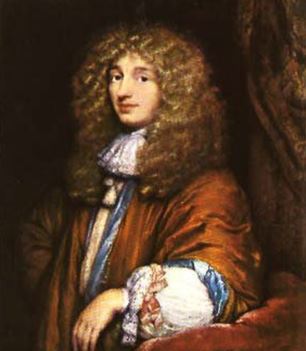
Christiaan Huygens
 (Christiaan Huygens)
Dutch polymath who formulated the wave theory of light (Huygens' principle), invented the pendulum clock, discovered Saturn's rings and moon Titan, and derived centrifugal force formulas.
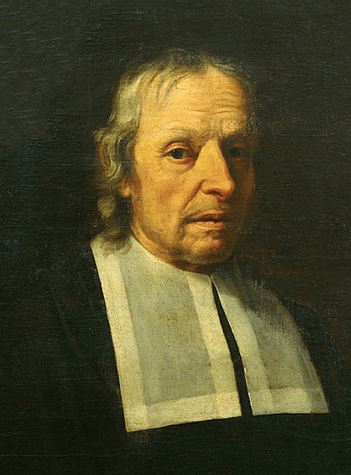
Marcello Malpighi
 (Marcello Malpighi)
Italian physician who discovered blood capillaries in frog lungs, completing Harvey's circulatory loop, and pioneered histology (Malpighian corpuscles of the kidney and spleen).
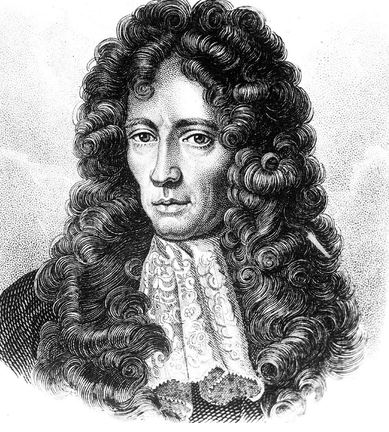
Robert Boyle
 (Robert Boyle)
Founding Fellow of the Royal Society who formulated Boyle's Law of gas pressure and volume, and authored The Sceptical Chymist (1661), defining chemical elements as unmingled bodies.
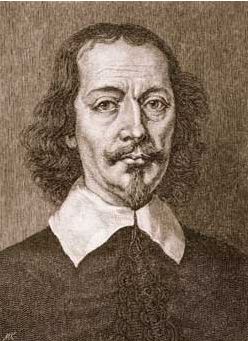
Otto von Guericke
(Otto von Guericke)
Mayor of Magdeburg who invented the mechanical vacuum pump, staged the famous 1654 Magdeburg Hemispheres demonstration with two teams of eight horses, and built the first electrostatic generator.
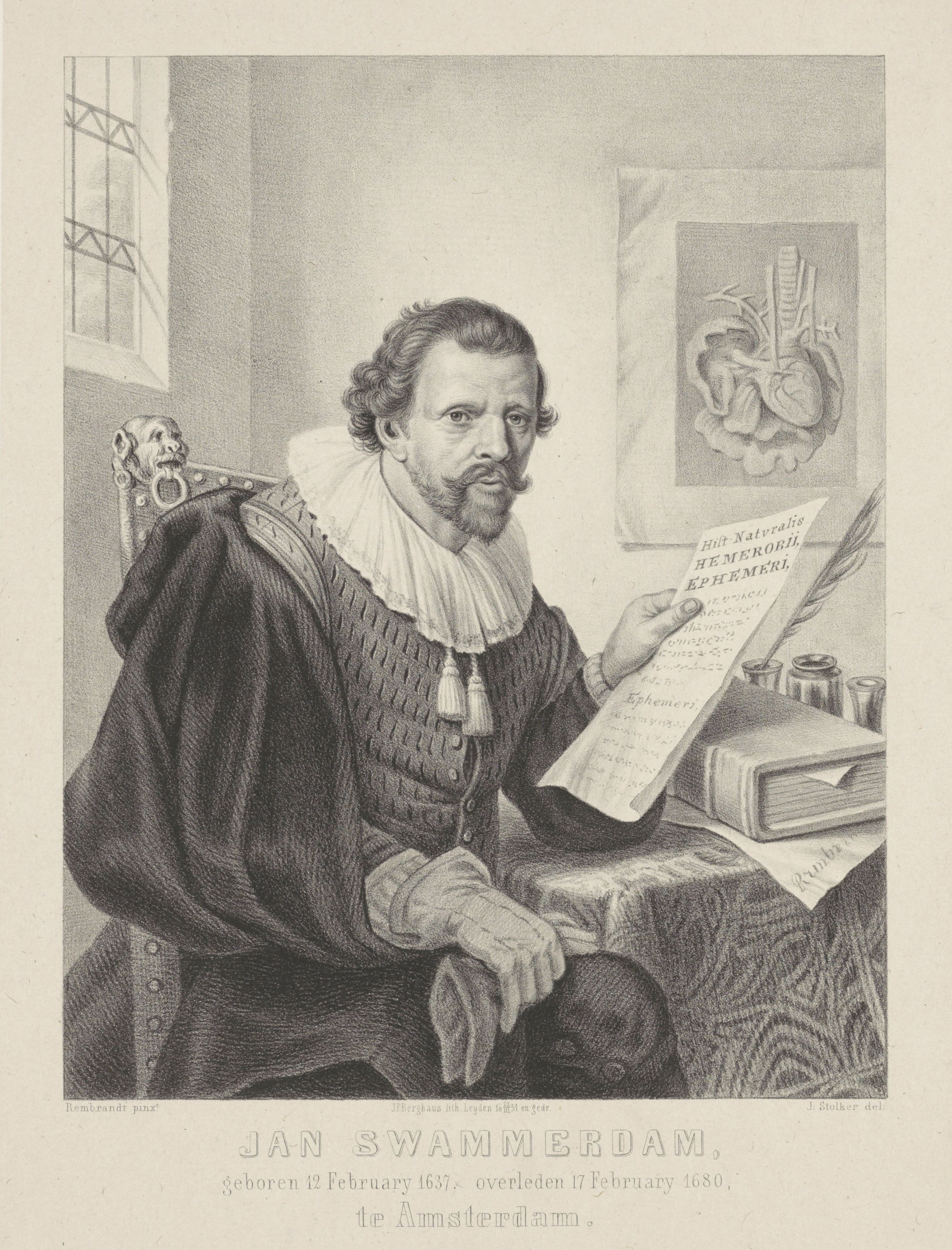
Jan Swammerdam
 (Jan Swammerdam)
Dutch pioneer of microscopic anatomy who discovered red blood cells in 1658, proved that muscles contract without changing volume, and revolutionized zoology by disproving spontaneous generation and classifying insect metamorphosis.
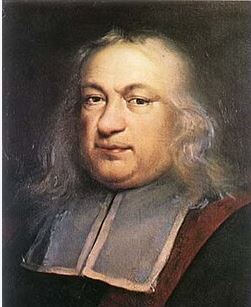
Pierre de Fermat
 (Pierre de Fermat)
French jurist and mathematician who founded modern number theory, formulated Fermat's Last Theorem, co-founded probability theory, and discovered the Principle of Least Time in optics.
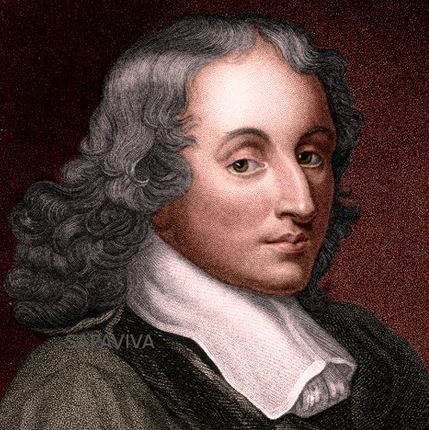
Blaise Pascal
(Blaise Pascal)
French child prodigy who invented the mechanical calculator (Pascaline), founded probability theory with Fermat, and proved that atmospheric pressure decreases with altitude.
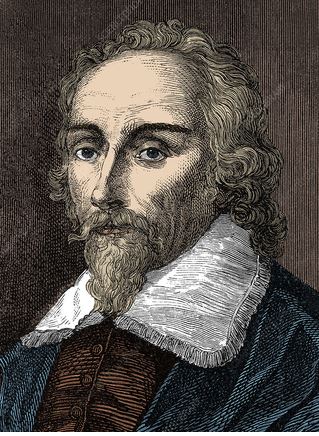
William Harvey
 (William Harvey)
English physician whose 1628 masterwork De Motu Cordis proved the complete systemic circulation of blood pumped continuously by the heart in a closed circuit throughout the body.
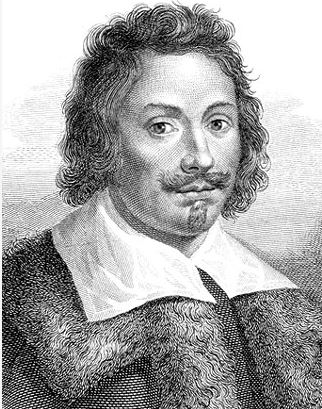
Evangelista Torricelli
(Evangelista Torricelli)
Italian physicist and disciple of Galileo who invented the mercury barometer, discovered Torricelli's Law of fluid efflux, and disproved nature's 'horror vacui' (horror of a vacuum).
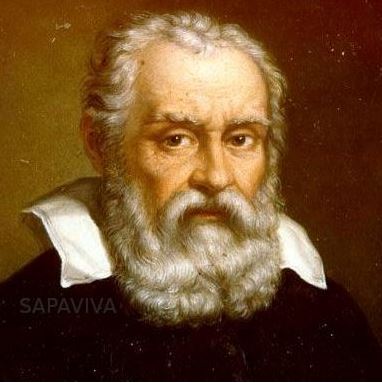
Galileo Galilei
(Galileo Galilei)
'Father of Modern Science' who improved the telescope to discover Jupiter's moons, Venusian phases, and lunar craters, formulated the law of falling bodies, and defended heliocentrism.
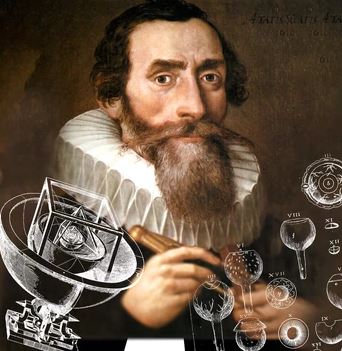
Johannes Kepler
(Johannes Kepler)
German astronomer and mathematician who discovered the three fundamental laws of planetary motion (elliptical orbits, equal areas in equal times, harmonic period-distance ratio).
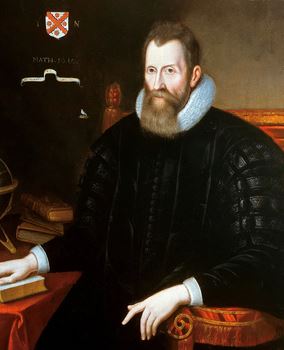
John Napier of Merchiston
(John Napier)
Scottish mathematician who invented logarithms, popularized the decimal point, and created 'Napier's Bones' calculating rods, liberating astronomers from tedious manual calculations.
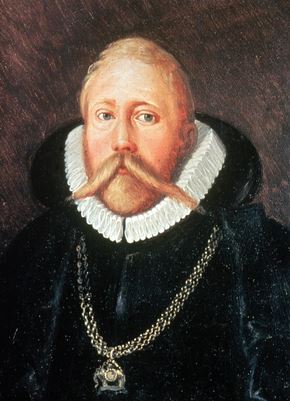
Tycho Brahe
 (Tycho Brahe)
Danish nobleman and astronomer whose palace-observatory Uraniborg compiled thirty years of naked-eye astronomical data of unprecedented precision, shattering Aristotelian immutable celestial spheres.
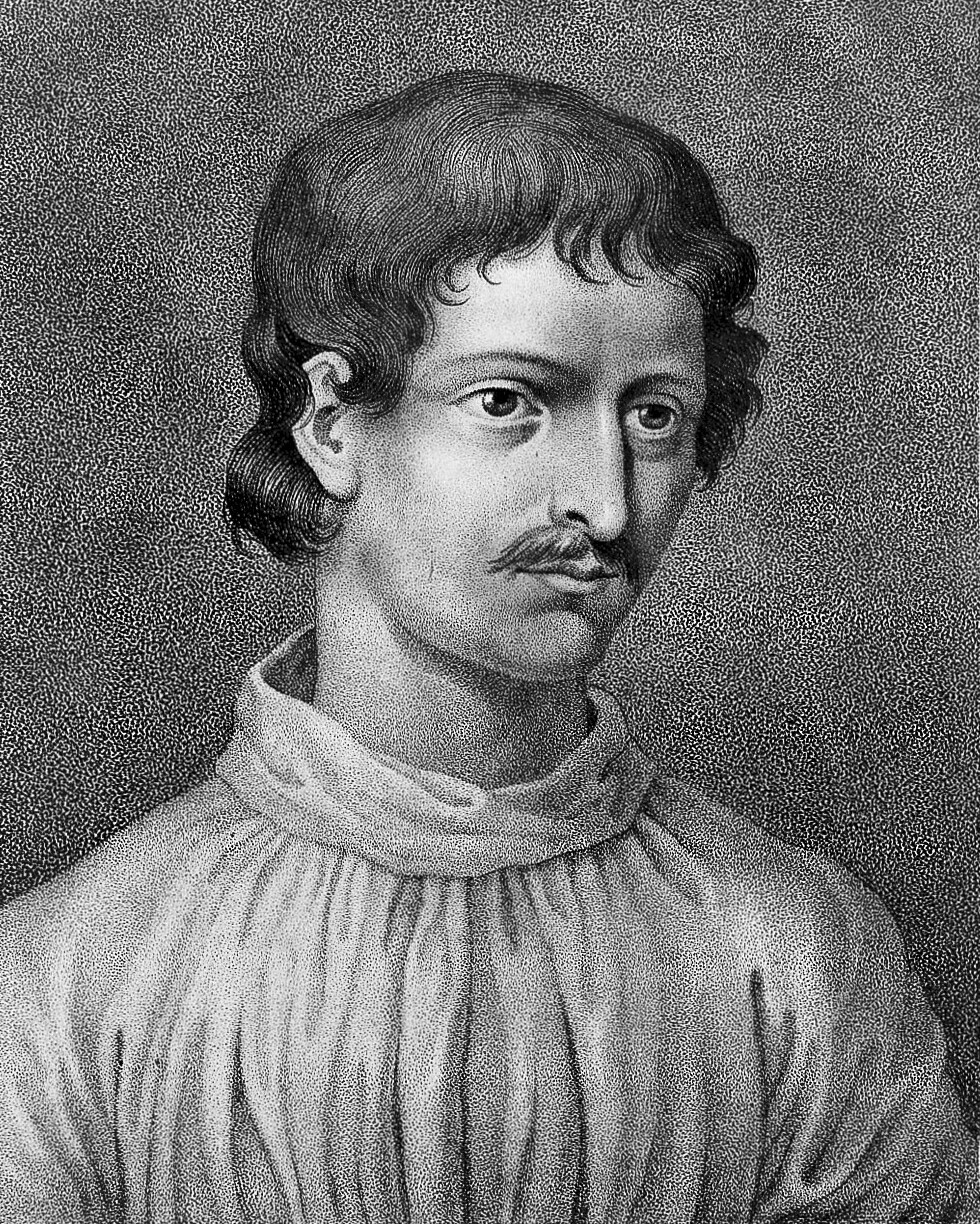
Giordano Bruno
(Giordano Bruno)
Italian cosmological visionary and philosopher who envisioned an infinite universe filled with countless inhabited solar systems.
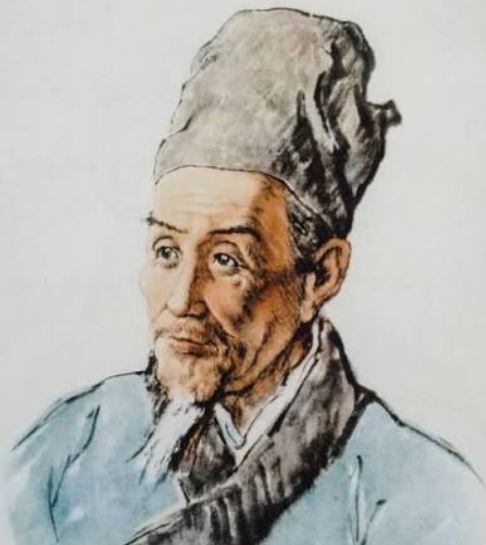
Li Shizhen
 (李時珍)
(李時珍)
Greatest pharmacologist and naturalist in Chinese history, who spent 27 years compiling the monumental Bencao Gangmu (Compendium of Materia Medica), cataloging 1,892 drugs and 11,096 prescriptions.
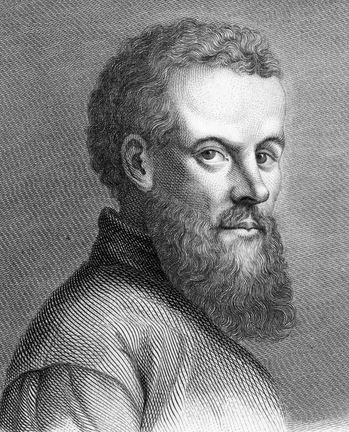
Andreas Vesalius
 (Andreas van Wesel)
Brilliant anatomist whose 1543 masterpiece De Humani Corporis Fabrica founded modern human anatomy through direct cadaver dissection, correcting over 200 errors in Galen's texts.
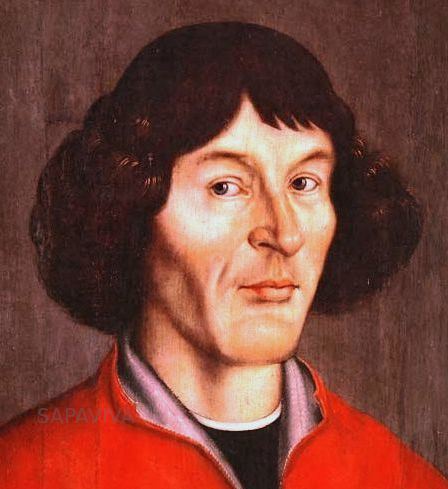
Nicolaus Copernicus
 (Mikołaj Kopernik)
Polish astronomer and canon whose 1543 masterpiece De revolutionibus orbium coelestium placed the Sun at the center of the universe, inaugurating the Scientific Revolution.
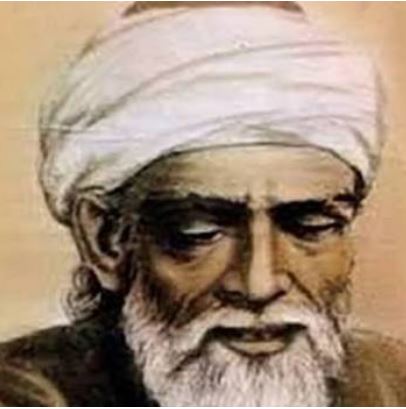
Al-Qalasadi (علي بن محمد القلصادي)
Nasrid-born North African mathematician who revolutionized mathematics by inventing the world's first modern algebraic symbolic notation using Arabic characters, dying in exile in Béja, Tunisia.