 United Kingdom
•
0 views
United Kingdom
•
0 views
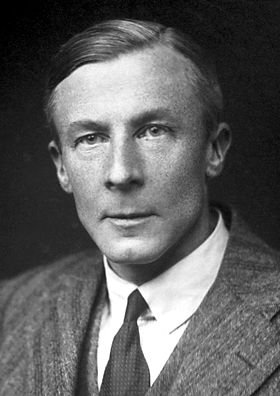
Edgar Adrian

Hampstead (London), United Kingdom
Archival Overview
English electrophysiologist who won the 1932 Nobel Prize in Medicine for recording the first electrical action potentials from single sensory nerve fibers, proving the 'all-or-none' law and frequency coding of nervous sensation.
Biographical Record
Lord Adrian (1889–1977) was educated at Trinity College, Cambridge. Using early thermionic vacuum-tube amplifiers and capillary electrometers, Adrian developed experimental methods sensitive enough to record the infinitesimal microvolt impulses from a single isolated nerve axon and muscle spindle.
In 1926, Adrian made the fundamental discovery that nerve impulses are invariant in size regardless of stimulus strength ('all-or-none' law): sensory intensity is coded not by changing the size of the electrical spike, but purely by the frequency of firing spikes per second. He later conducted pioneer recordings of human EEG brainwaves alongside Matthews.
Key Life Milestones
First Single-Fiber Nerve Impulse Recordings
Recorded single axon potentials from frog muscle spindles, establishing frequency coding in the nervous system.
Awarded the Nobel Prize in Medicine
Shared the Nobel Prize with Sir Charles Sherrington for discoveries regarding the function of neurons.
Memorial Guestbook & Tributes
0 messages recordedLeave a Respectful Tribute
Final Resting Place
Perpetual MemorialCambridge, United Kingdom