 France
•
2,930 views
France
•
2,930 views
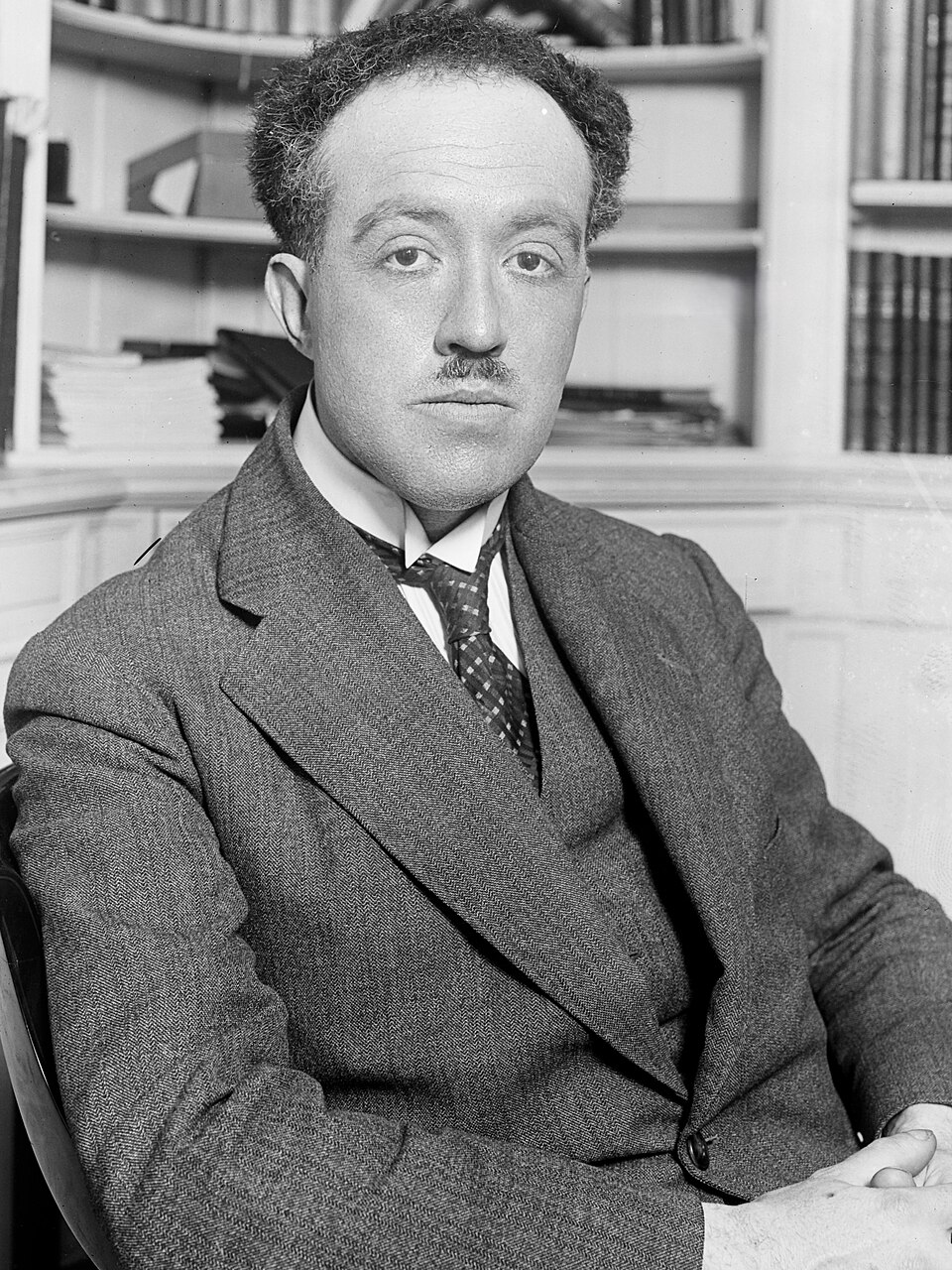
Louis de Broglie

Dieppe, Normandy, France
Archival Overview
French aristocratic physicist who discovered the wave nature of matter, founding wave mechanics.
Biographical Record
Louis Victor Pierre Raymond, 7th Duc de Broglie, was a French theoretical physicist whose revolutionary insight unified the dual nature of light and matter. Originating from one of France's most prominent aristocratic families, he first studied history and law before switching to theoretical physics after serving as a radio telegrapher stationed at the Eiffel Tower during World War I.
In his landmark 1924 doctoral thesis at the Sorbonne, de Broglie audaciously postulated that if light waves can behave like particles (photons), then material particles such as electrons must also exhibit wave properties, defined by the formula lambda equals h divided by p. Initially greeted with skepticism, his hypothesis was endorsed by Albert Einstein and confirmed experimentally in 1927 by Clinton Davisson and Lester Germer via electron diffraction. De Broglie was awarded the 1929 Nobel Prize in Physics for his discovery of the wave nature of electrons, providing the bedrock upon which Erwin Schrödinger built wave mechanics.
Key Life Milestones
Matter Wave Hypothesis
Proposed that all moving matter possesses a wave nature, establishing the fundamental wave-particle duality of quantum mechanics.
Nobel Prize in Physics
Awarded the Nobel Prize in Physics for his discovery of the wave nature of electrons following experimental confirmation of electron diffraction.
Memorial Guestbook & Tributes
0 messages recordedLeave a Respectful Tribute
Final Resting Place
Perpetual MemorialNeuilly-sur-Seine, Hauts-de-Seine, France