Public Figures & Cultural Luminaries
Filterable archive covering centuries of intellectual, artistic, and moral contributions to the human story.
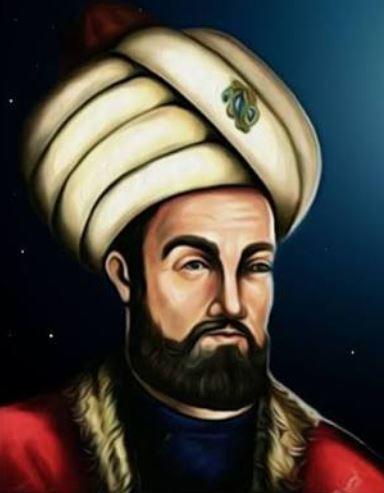
Ali Qushji (Ala al-Din Ali ibn Muhammad)
 (علاء الدين علي بن محمد القوشجي)
Astronomer who directed the Samarkand Observatory and later served Sultan Mehmed II in Istanbul, proving that astronomy does not rely on Aristotelian physics and supporting the Earth's rotation.
Ibn Taghribirdi (ابن تغري بردي)
Distinguished Egyptian historian of Mamluk aristocratic descent who studied under Al-Maqrizi and authored 'Al-Nujum al-Zahirah', the definitive multi-volume chronicle of Egypt from the Arab conquest to 1468.
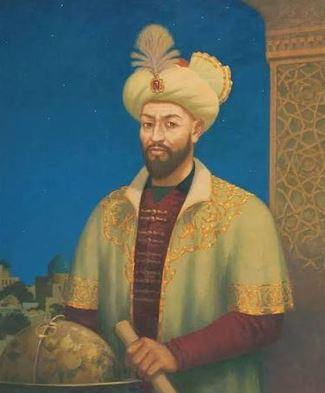
Ulugh Beg (Mirza Muhammad Taraghay)
 (میرزا محمد طارق الغبیگ)
Timurid ruler and astronomer who constructed the colossal Samarkand Observatory with its 40-meter meridian sextant, producing the Zij-i Sultani star catalog of 1,018 stars.
Al-Maqrizi (تقي الدين المقريزي)
Preeminent Egyptian Mamluk historian, topographer, and economic theorist whose 'Al-Khitat' provided the definitive architectural and urban history of Cairo and whose 'Ighathat al-Umma' analyzed economic inflation.
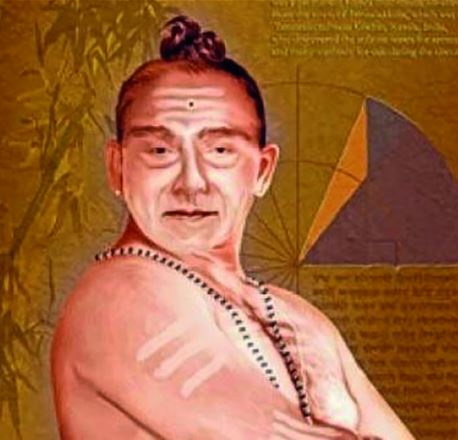
Madhava of Sangamagrama
 (മാധവൻ (സംഗമഗ്രാമ മാധവൻ))
Founder of the Kerala School of Astronomy and Mathematics who discovered infinite power series expansions for sine, cosine, and arctangent (the Madhava-Leibniz series) 250 years before Newton.
Al-Nuwayri (شهاب الدين النويري)
Egyptian Mamluk polymath, financial administrator, and encyclopedist who authored 'Nihayat al-Arab fi Funun al-Adab', a monumental thirty-three-volume encyclopedia preserving medieval Islamic science, history, and administration.
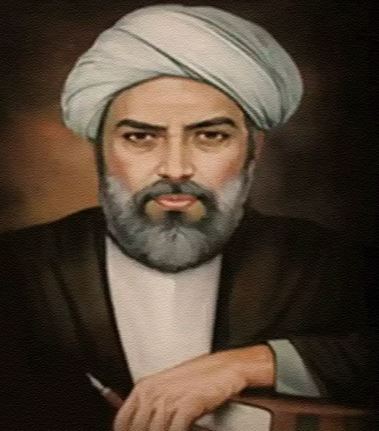
Ibn al-Banna al-Marrakushi (ابن البناء المراكشي)
Brilliant Moroccan mathematician and astronomer who introduced innovative algebraic notation, combinatorial formulas, and fractions in his masterwork 'Talkhis A'mal al-Hisab', honored with a lunar crater named Al-Marrakushi.
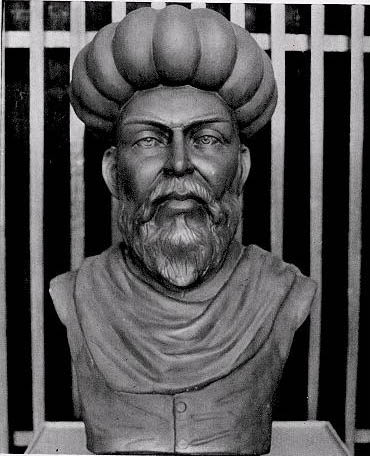
Ibn al-Nafis
 (ابن النفيس)
Islamic physician and polymath who spent his career in Cairo as Chief Physician of Egypt, celebrated for discovering the pulmonary circulation of blood three centuries before William Harvey.
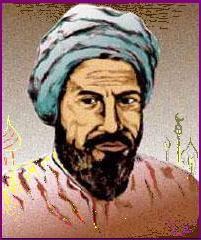
Ibn al-Nafis (Ala al-Din al-Qurashi)
(ابن النفيس (علاء الدين علي بن أبي الحزم))
Syrian-Egyptian physician and chief of Cairo's hospital who discovered pulmonary transit (lesser blood circulation) 300 years before William Harvey and Michael Servetus, refuting Galen.
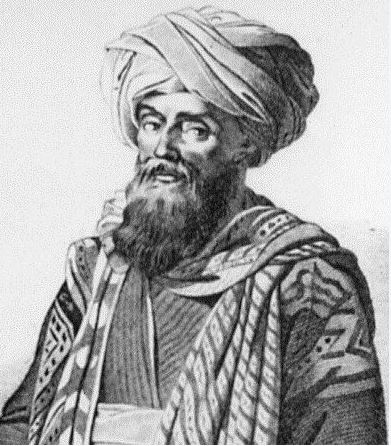
Ibn al-Baytar (Diya al-Din al-Malaqi)
 (ضياء الدين عبد الله بن أحمد المالقي (ابن البيطار))
Greatest botanist and pharmacologist of the Middle Ages who cataloged 1,400 medicinal plants, foods, and drugs in his encyclopedic Compendium on Simple Medicaments and Foods.
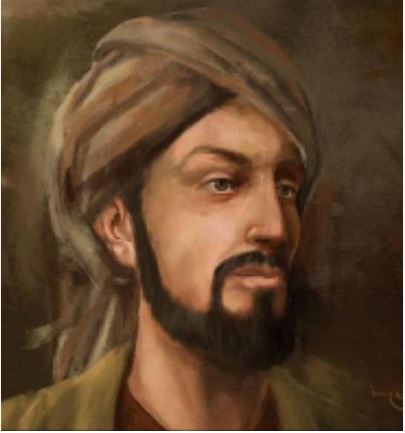
Ismail al-Jazari
 (بديع الزمان أبو العز بن إسماعيل الرزاز الجزري)
Chief engineer of the Artuqid palace who invented the crankshaft, camshaft, suction pumps, programmable musical automata, and the monumental Elephant Water Clock.
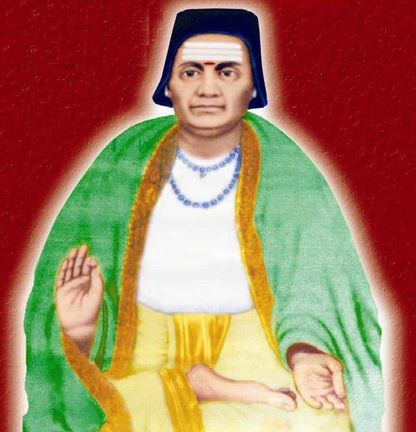
Bhaskara II (Bhaskaracharya)
(भास्कराचार्य)
Preeminent medieval Indian mathematician who authored the Siddhanta Shiromani and Lilavati, solving Pell's equation (Chakravala method) and discovering differential calculus principles.
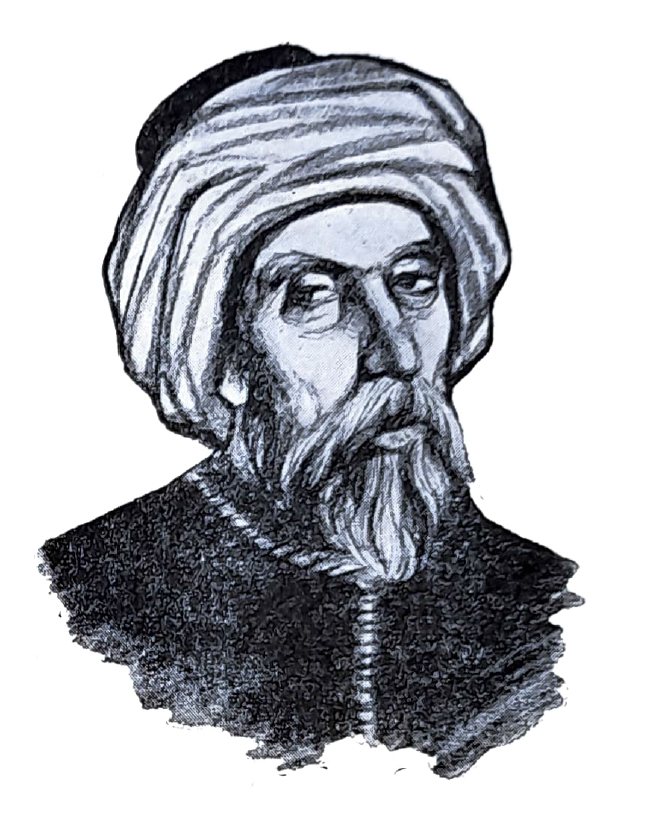
Al-Idrisi
(الشريف الإدريسي)
North African Arab geographer, cartographer, and Egyptologist of noble Idrisi lineage who created the 'Tabula Rogeriana' in 1154 for King Roger II of Sicily, the most advanced world map and geographic encyclopedia of the medieval era.
Omar Khayyam
(عمر خیام نیشابوری)
Persian polymath who geometrically solved cubic equations using intersecting conics, designed the ultra-precise Jalali solar calendar, and penned the world-famous Rubaiyat.
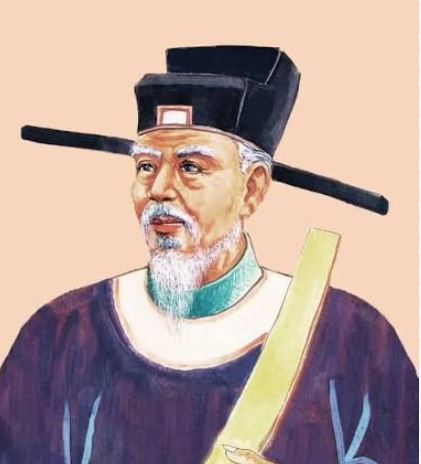
Su Song
 (蘇頌)
(蘇頌)
Song Dynasty Prime Minister and engineer who designed the 40-foot water-driven astronomical clock tower of Kaifeng, featuring the world's earliest mechanical escapement and endless power-transmitting chain drive.
Shen Kuo (Shen Gua)
(沈括)
Song Dynasty universal polymath whose Dream Pool Essays described the magnetic needle compass (magnetic declination), petrified bamboo fossils (geomorphology), and movable type printing.
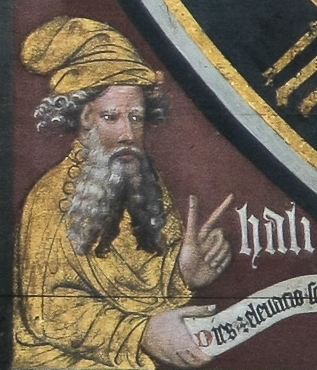
Ali ibn Ridwan
 (علي بن رضوان)
Self-taught Egyptian polymath and Chief Royal Physician of the Fatimid Caliphate, renowned for his detailed astronomical recording of the supernova SN 1006 and his commentary on Galen.
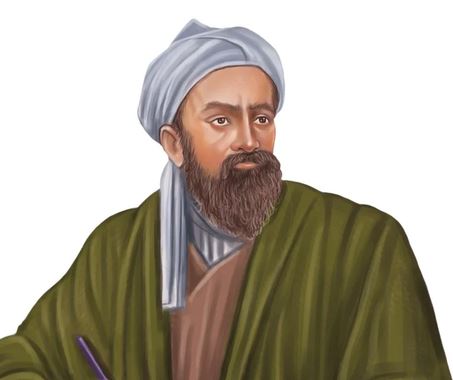
Al-Biruni (Abu Rayhan al-Biruni)
(أبو الريحان محمد بن أحمد البيروني)
Universal polymath who calculated the Earth's radius to within 1% using mountain trigonometry, founded comparative Indology, and pioneered anthropology and mineral density tables.