 United Kingdom
•
9 views
United Kingdom
•
9 views
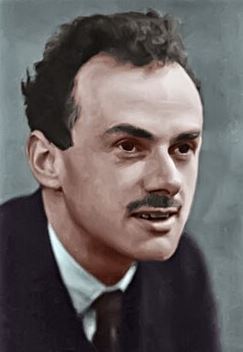
Paul Dirac

Bristol (Gloucestershire), United Kingdom
Archival Overview
Legendary British physicist who formulated the relativistic Dirac equation, unified quantum mechanics with special relativity, and theoretically predicted the existence of antimatter (the positron).
Biographical Record
Paul Adrien Maurice Dirac (1902–1984) served as Lucasian Professor of Mathematics at Cambridge. In 1928, Dirac formulated the relativistic wave equation for the electron (the Dirac equation), which was completely compatible with Einstein's special relativity.
The equation naturally explained electron spin and predicted the existence of negative-energy states, which Dirac interpreted as antiparticles of identical mass but positive charge. In 1932, Carl Anderson discovered the positron, confirming Dirac's prediction. Dirac introduced bra-ket notation (⟨bra|ket⟩) and shared the 1933 Nobel Prize in Physics with Erwin Schrödinger.
Key Life Milestones
Formulation of the Relativistic Dirac Equation
Derived the relativistic electron wave equation, predicting spin and the existence of antimatter.
Nobel Prize in Physics
Awarded the Nobel Prize jointly with Erwin Schrödinger for the discovery of new productive forms of atomic theory.
Memorial Guestbook & Tributes
0 messages recordedLeave a Respectful Tribute
Final Resting Place
Perpetual MemorialTallahassee (Florida), United States