 United States
•
0 views
United States
•
0 views
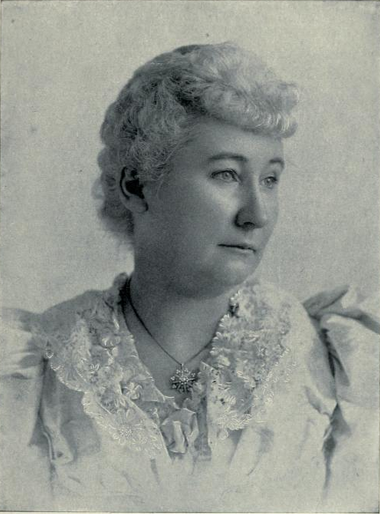
Sewall Wright

Melrose (Massachusetts), United States
Archival Overview
American geneticist who co-founded theoretical population genetics alongside Fisher and Haldane, discovered genetic drift (the Sewall Wright Effect), invented the inbreeding coefficient, and developed the Shifting Balance Theory of evolution.
Biographical Record
Sewall Wright (1889–1988) studied under William E. Castle at Harvard before spending ten years at the US Department of Agriculture analyzing the coat color genetics of 40,000 guinea pigs. In 1921, he invented 'path analysis', a mathematical technique for evaluating causal models still used across sociology, economics, and biology.
At the University of Chicago, Wright formulated the mathematics of genetic drift in finite populations, showing that random sampling fluctuations in small populations can fix alleles independently of natural selection. His 'adaptive landscape' metaphor (fitness peaks and valleys) and Shifting Balance Theory shaped modern evolutionary theory.
Key Life Milestones
Invention of Path Analysis and Inbreeding Coefficients
Developed the mathematical foundation for analyzing genetic relatedness and causal structural models.
Formulation of the Shifting Balance Theory and Adaptive Landscapes
Introduced the iconic concept of adaptive landscapes and genetic drift to the 6th International Genetics Congress.
Memorial Guestbook & Tributes
0 messages recordedLeave a Respectful Tribute
Final Resting Place
Perpetual MemorialMadison (Wisconsin), United States