 Japan
•
2,347 views
Japan
•
2,347 views
Hideki Yukawa

Tokyo, Japan
Archival Overview
First Japanese Nobel laureate who predicted the existence of mesons to explain the strong nuclear force.
Biographical Record
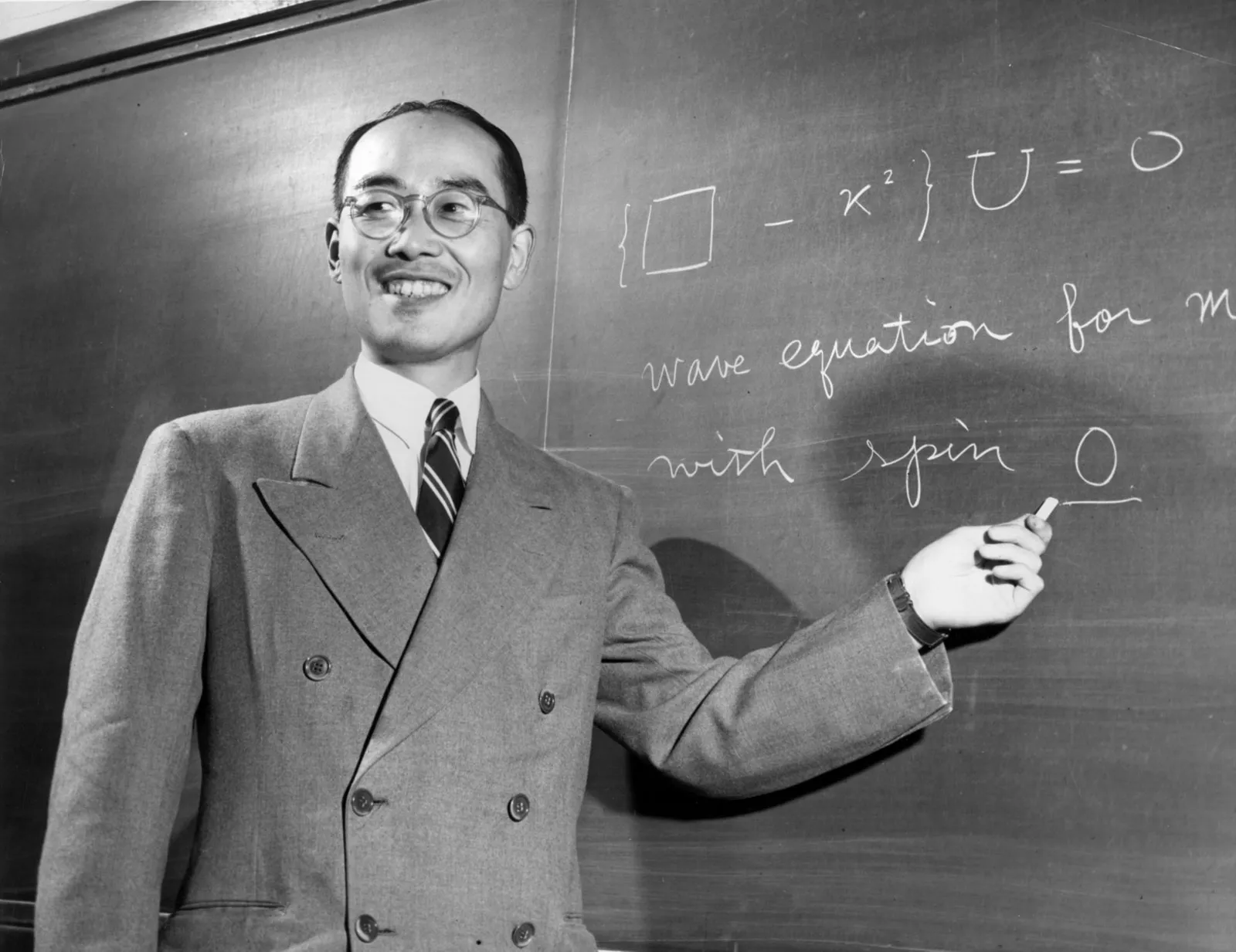
Hideki Yukawa was a visionary Japanese theoretical physicist whose seminal paper on nuclear forces opened modern particle physics and established Japan as an intellectual powerhouse in fundamental science. Educated at Kyoto Imperial University, Yukawa pondered how positively charged protons in an atomic nucleus could remain bound together despite overwhelming electrostatic repulsion.
In 1935, at age twenty-eight, Yukawa published his theory of the strong nuclear interaction, postulating that protons and neutrons are held together by the exchange of an unknown massive quantum particle—analogous to how photons mediate electromagnetism. Calculating the particle's mass to be approximately two hundred times that of an electron, he predicted what became known as the pi-meson (pion), which was discovered in cosmic rays in 1947 by Cecil Powell. In 1949, Yukawa became the first Japanese citizen to receive the Nobel Prize. In his later years, he co-signed the Russell-Einstein Manifesto advocating worldwide nuclear disarmament.
Key Life Milestones
Prediction of the Meson
Published his historic theory predicting the exchange of intermediate-mass mesons as the mechanism binding atomic nuclei together.
First Japanese Nobel Prize
Awarded the Nobel Prize in Physics for his prediction of the existence of mesons on the basis of theoretical work on nuclear forces.
Memorial Guestbook & Tributes
0 messages recordedLeave a Respectful Tribute
Final Resting Place
Perpetual MemorialHigashiyama, Kyoto, Japan