 Japan
•
3,041 views
Japan
•
3,041 views
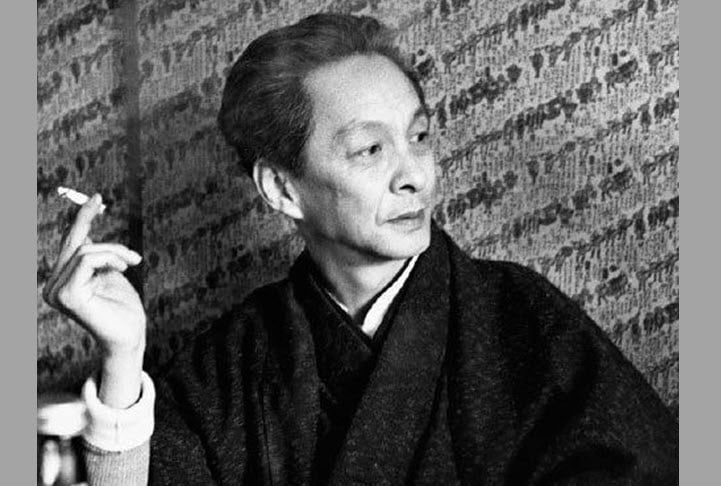
Sin-Itiro Tomonaga

Tokyo, Japan
Archival Overview
Japanese theoretical physicist who independently formulated relativistic quantum electrodynamics and renormalization.
Biographical Record
Sin-Itiro Tomonaga was a preeminent Japanese theoretical physicist who played an indispensable role in rescuing quantum field theory from crippling infinite values. A classmate of Hideki Yukawa at Kyoto Imperial University, Tomonaga studied under Werner Heisenberg in Leipzig before returning to Japan during the turbulent years leading up to World War II.
Working in intellectual isolation in war-ravaged Tokyo with scant scientific literature, Tomonaga developed a manifestly relativistic formulation of quantum electrodynamics using super-many-time theory. In 1943, he introduced the concept of renormalization—mathematically absorbing the infinite self-energies of electrons into observed physical mass and charge. Independently reached by Richard Feynman and Julian Schwinger in the West, Tomonaga's formulation demonstrated complete mathematical equivalence, earning the three physicists the joint 1965 Nobel Prize in Physics. Tomonaga later served as president of the Tokyo University of Education and campaigned for nuclear nonproliferation.
Key Life Milestones
Super-Many-Time Theory & Renormalization
Formulated relativistic quantum electrodynamics in wartime Japan, showing how to cancel infinities to obtain finite physical predictions.
Nobel Prize in Physics
Awarded the Nobel Prize in Physics jointly with Feynman and Schwinger for their fundamental work in quantum electrodynamics.
Memorial Guestbook & Tributes
0 messages recordedLeave a Respectful Tribute
Final Resting Place
Perpetual MemorialFuchu, Tokyo, Japan