 United States
•
0 views
United States
•
0 views
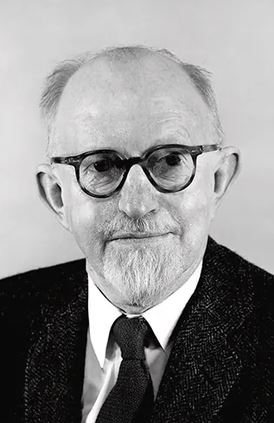
George Gaylord Simpson

Chicago (Illinois), United States
Archival Overview
Foremost paleontologist of the 20th century who integrated the fossil record into the Modern Evolutionary Synthesis in his 1944 masterpiece 'Tempo and Mode in Evolution', deciphering the evolutionary radiation of mammals and the Great American Biotic Interchange.
Biographical Record
George Gaylord Simpson (1902–1984) curated fossil vertebrates at the American Museum of Natural History, leading rugged fossil expeditions to Patagonia and the American West. Dissecting Mesozoic and Cenozoic mammalian fossils, Simpson brought rigorous statistical mathematics to paleontology.
In 'Tempo and Mode in Evolution' (1944), Simpson demolished vitalist and neo-Lamarckian claims that paleontology contradicted genetics, proving that fossil lineages—such as the horse family Equidae—evolved via variable rates (bradytelic, horotelic, tachytelic) fully consistent with natural selection acting on Mendelian genes.
Key Life Milestones
Publication of 'Tempo and Mode in Evolution'
Integrated the fossil record into modern population genetics, completing the Modern Synthesis.
Analysis of the Great American Biotic Interchange
Documented the massive faunal exchange between North and South America following the rise of the Isthmus of Panama.
Memorial Guestbook & Tributes
0 messages recordedLeave a Respectful Tribute
Final Resting Place
Perpetual MemorialAlbuquerque (New Mexico), United States