 Australia
•
0 views
Australia
•
0 views
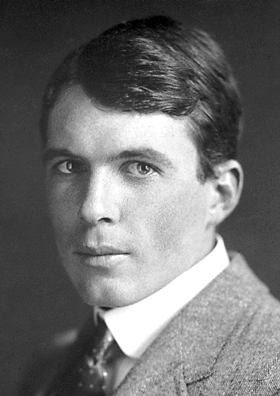
William Lawrence Bragg

Adelaide, Australia
Archival Overview
Australian-born British physicist who formulated Bragg's Law of X-ray diffraction and remains the youngest ever Nobel laureate in physics, receiving the award at age twenty-five in 1915.
Biographical Record
William Lawrence Bragg (1890–1971) studied at Adelaide and Trinity College, Cambridge. In 1912, as a graduate student, he derived the famous equation nλ = 2d sin θ, proving that crystals act as diffraction gratings for X-rays and enabling precise calculation of atomic spacing.
As director of the Cavendish Laboratory from 1938, Lawrence Bragg supported the biophysical research of James Watson, Francis Crick, and Max Perutz, which led to the historic discovery of the double helix structure of DNA.
Key Life Milestones
Formulation of Bragg's Law
Derived the fundamental equation governing X-ray diffraction in crystalline materials.
Youngest Physics Nobel Laureate
Awarded the Nobel Prize in Physics at age twenty-five alongside his father William Henry Bragg.
Memorial Guestbook & Tributes
0 messages recordedLeave a Respectful Tribute
Final Resting Place
Perpetual MemorialCambridge, United Kingdom