 German Empire (Poland)
•
2,758 views
German Empire (Poland)
•
2,758 views
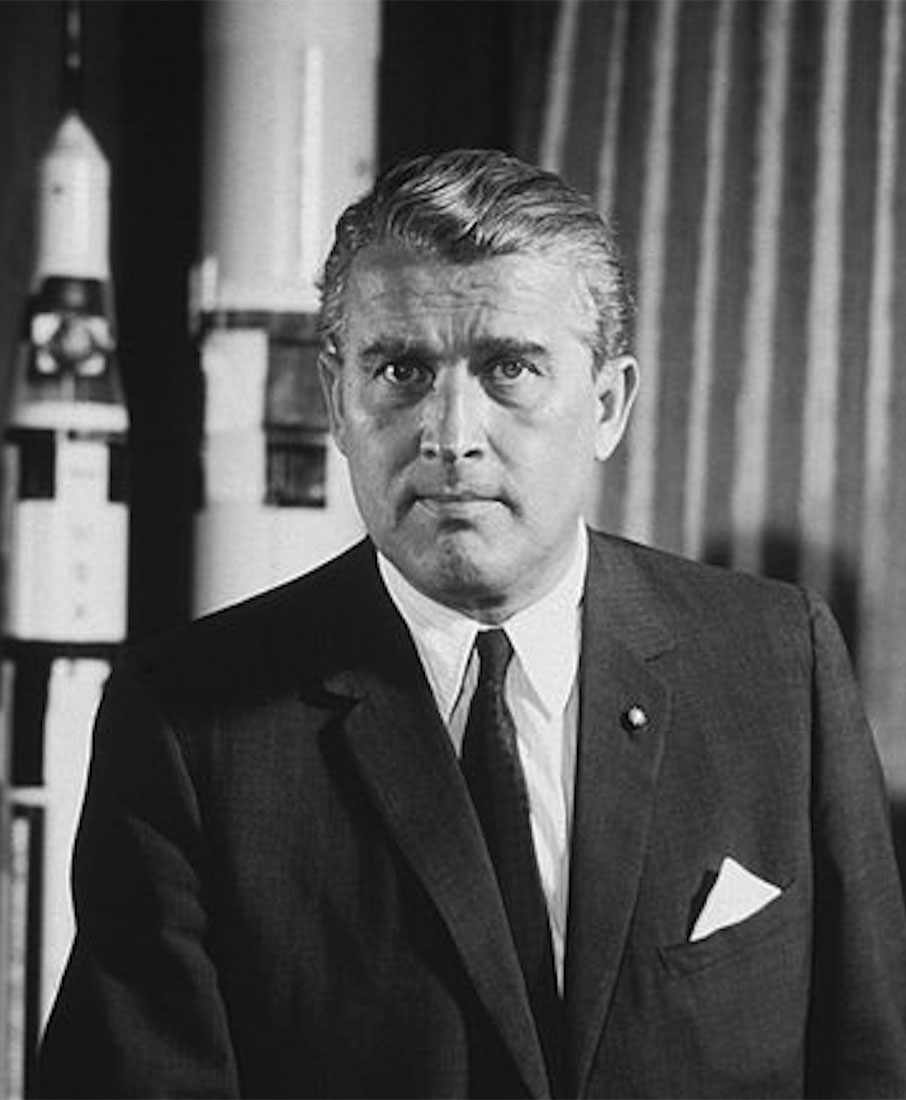
Wernher von Braun

Wirsitz, Posen, German Empire (Poland)
Archival Overview
German-American aerospace engineer and NASA visionary who designed the Saturn V rocket that propelled Apollo 11 to the Moon.
Biographical Record
Wernher Magnus Maximilian Freiherr von Braun was a visionary aerospace engineer whose complex career bridged Nazi Germany's ballistic missile program and NASA's Apollo lunar landings. Inspired by Hermann Oberth and science fiction, von Braun became technical director of the Peenemünde Army Research Center at age twenty-five, developing the liquid-propellant V-2 ballistic rocket—the first human artifact to breach the boundary of space (the Kármán line) in 1944.
Surrendering to American forces at the end of World War II under Operation Paperclip, von Braun moved to Huntsville, Alabama, where he led the development of the Redstone rocket that launched America's first satellite, Explorer 1, and first astronaut, Alan Shepard. As director of NASA's Marshall Space Flight Center, von Braun designed the colossal, 363-foot-tall Saturn V super heavy-lift rocket, which flew thirteen flawless missions with zero fatalities, successfully placing twelve astronauts on the lunar surface.
Key Life Milestones
First Man-Made Object in Space
Engineered the V-2 rocket that reached an apogee of 189 kilometers, becoming the first artificial object to reach space.
Saturn V Lunar Triumph
Directed the design and construction of the Saturn V moon rocket that launched Apollo 11 to land humans on the Moon.
Memorial Guestbook & Tributes
0 messages recordedLeave a Respectful Tribute
Final Resting Place
Perpetual MemorialAlexandria, Virginia, United States