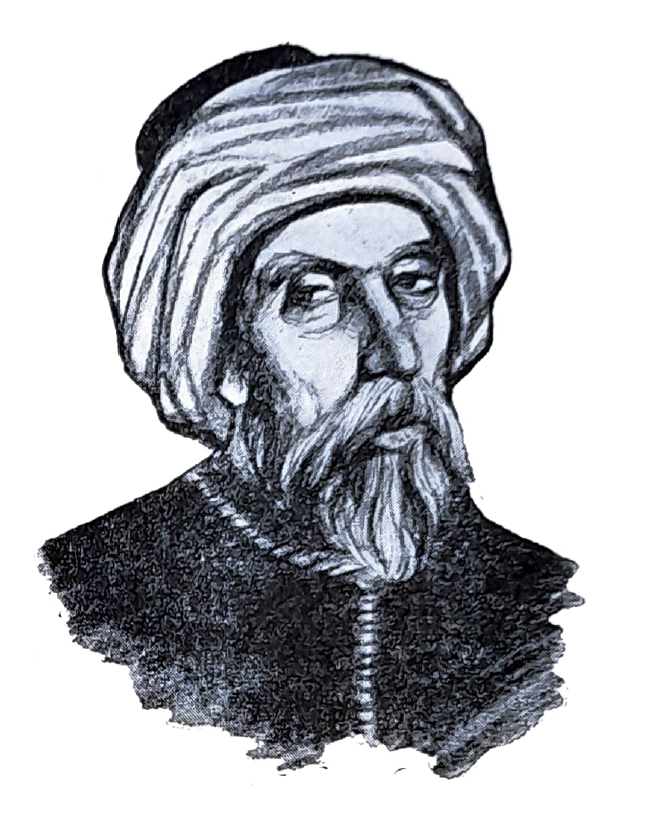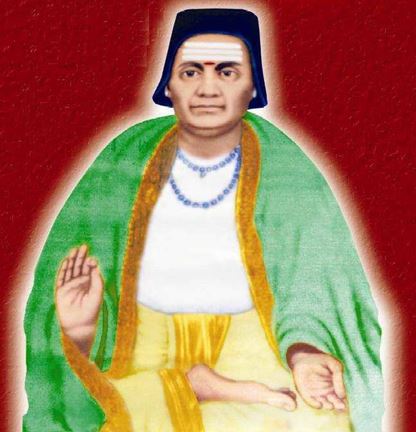
Bhaskara II (Bhaskaracharya)
Preeminent medieval Indian mathematician who authored the Siddhanta Shiromani and Lilavati, solving Pell's equation (Chakravala method) and discovering differential calculus principles.
Start typing to search worldwide archives and community tributes
Filterable archive covering centuries of intellectual, artistic, and moral contributions to the human story.
Preeminent medieval Indian mathematician who authored the Siddhanta Shiromani and Lilavati, solving Pell's equation (Chakravala method) and discovering differential calculus principles.
Towering 12th-century philosopher, logician, and legal theorist from Ouargla, author of 'Al-Dalil wa-l-Burhan' which integrated Aristotelian logic with Islamic theology.
North African Arab geographer, cartographer, and Egyptologist of noble Idrisi lineage who created the 'Tabula Rogeriana' in 1154 for King Roger II of Sicily, the most advanced world map and geographic encyclopedia of the medieval era.
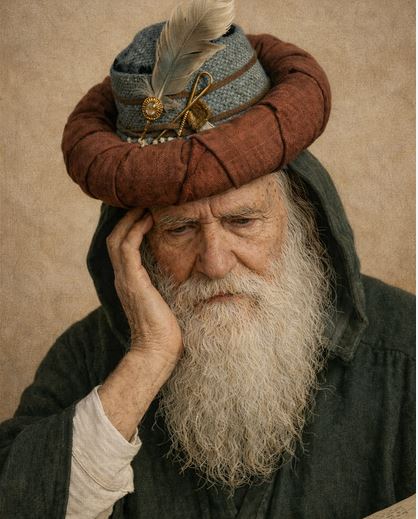
Pioneering physician known to the Western world as Avenzoar, who served the Almohad dynasty in Marrakesh, introduced animal testing and human tracheotomy, and authored the foundational Kitab al-Taysir.
Persian polymath who geometrically solved cubic equations using intersecting conics, designed the ultra-precise Jalali solar calendar, and penned the world-famous Rubaiyat.
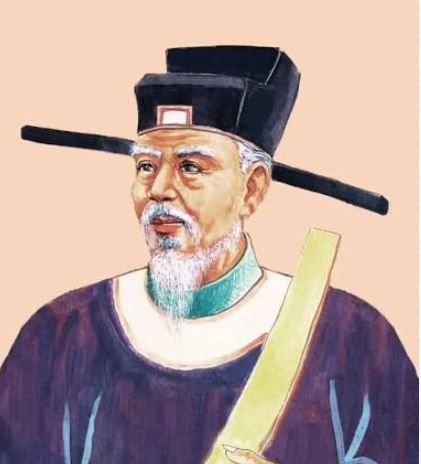
Song Dynasty Prime Minister and engineer who designed the 40-foot water-driven astronomical clock tower of Kaifeng, featuring the world's earliest mechanical escapement and endless power-transmitting chain drive.
Song Dynasty universal polymath whose Dream Pool Essays described the magnetic needle compass (magnetic declination), petrified bamboo fossils (geomorphology), and movable type printing.
Pioneering astronomer whose planetary tables ('Toledan Tables') and universal astrolabe ('Azafea' / Al-Safiha) were adopted by Moroccan astronomers in Fez and across Renaissance Europe.
North African physician and scholar who revolutionized European medicine by translating dozens of monumental Arabic medical and pharmacological texts into Latin at Salerno and Monte Cassino.
Self-taught Egyptian polymath and Chief Royal Physician of the Fatimid Caliphate, renowned for his detailed astronomical recording of the supernova SN 1006 and his commentary on Galen.
Universal polymath who calculated the Earth's radius to within 1% using mountain trigonometry, founded comparative Indology, and pioneered anthropology and mineral density tables.
Pioneering polymath revered as the 'father of modern optics' and architect of the modern scientific method, who composed his revolutionary Book of Optics near Al-Azhar in Fatimid Cairo.
'Father of Operative Surgery' of Islamic Spain whose 30-volume Al-Tasrif introduced over 200 surgical instruments, catgut internal sutures, and shaped surgery across Europe for 500 years.
Fatimid Egyptian astronomer and mathematician who compiled the legendary 'Zij al-Kabir al-Hakimi' (The Hakemite Tables), formulated early prosthaphaeresis trigonometric identities, and observed eclipses with unprecedented accuracy.
Pioneering 10th-century North African physician from Kairouan who authored 'Zad al-Musafir' (The Traveler's Provision), which became the premier medical handbook of medieval Europe under the title 'Viaticum Peregrinantis'.
Great astronomer and mathematician of the Islamic Golden Age whose Kitab al-Zij corrected Ptolemy's calculations, measured the solar year to within 2 minutes, and replaced chords with trigonometric sines.
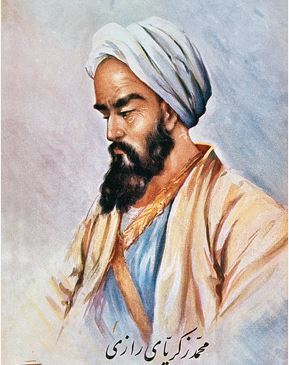
Chief physician of Baghdad Hospital who first clinically distinguished smallpox from measles, pioneered pediatric medicine, discovered ethanol distillation, and authored Kitab al-Hawi.
Pioneering 9th-century Baghdad-trained physician in Kairouan who authored the world's first clinical psychiatric treatise on depression, Maqala fi al-Malikhuliya (Treatise on Melancholy).