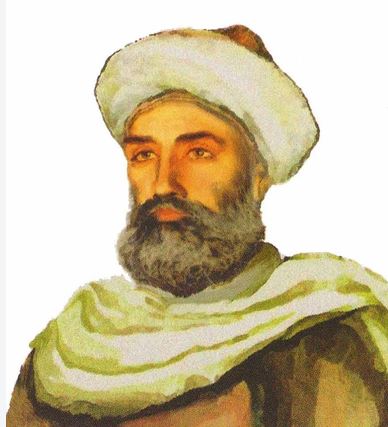
Archival Overview
Fatimid Egyptian astronomer and mathematician who compiled the legendary 'Zij al-Kabir al-Hakimi' (The Hakemite Tables), formulated early prosthaphaeresis trigonometric identities, and observed eclipses with unprecedented accuracy.
Biographical Record
Abu al-Hasan Ali ibn Abd al-Rahman ibn Yunus (c. 950–1009 CE) came from an illustrious scholarly family in Fustat. Recognizing his mathematical genius, Fatimid Caliphs Al-Aziz and Al-Hakim built an astronomical observatory for him on the cliffs of the Mokattam Hills overlooking Cairo, providing him with giant astrolabes and brass quadrants.
Ibn Yunus authored Az-Zij al-Kabir al-Hakimi (The Great Hakemite Astronomical Tables), containing forty chapters of observations of planetary conjunctions, lunar and solar eclipses, and equinoxes, calculating the tilt of the ecliptic to within seconds of a degree. He pioneered the mathematical method of prosthaphaeresis—converting multiplication into addition using trigonometric identities—which anticipated John Napier's logarithms by six centuries.
Key Life Milestones
Invention of Prosthaphaeresis Trigonometry
Formulated the trigonometric product-to-sum identities that simplified complex astronomical calculations.
Publication of the Hakemite Tables
Presented Caliph Al-Hakim with the landmark astronomical tables used by medieval astronomers across the East and West.
Memorial Guestbook & Tributes
0 messages recordedLeave a Respectful Tribute
Final Resting Place
Perpetual MemorialCairo, Egypt