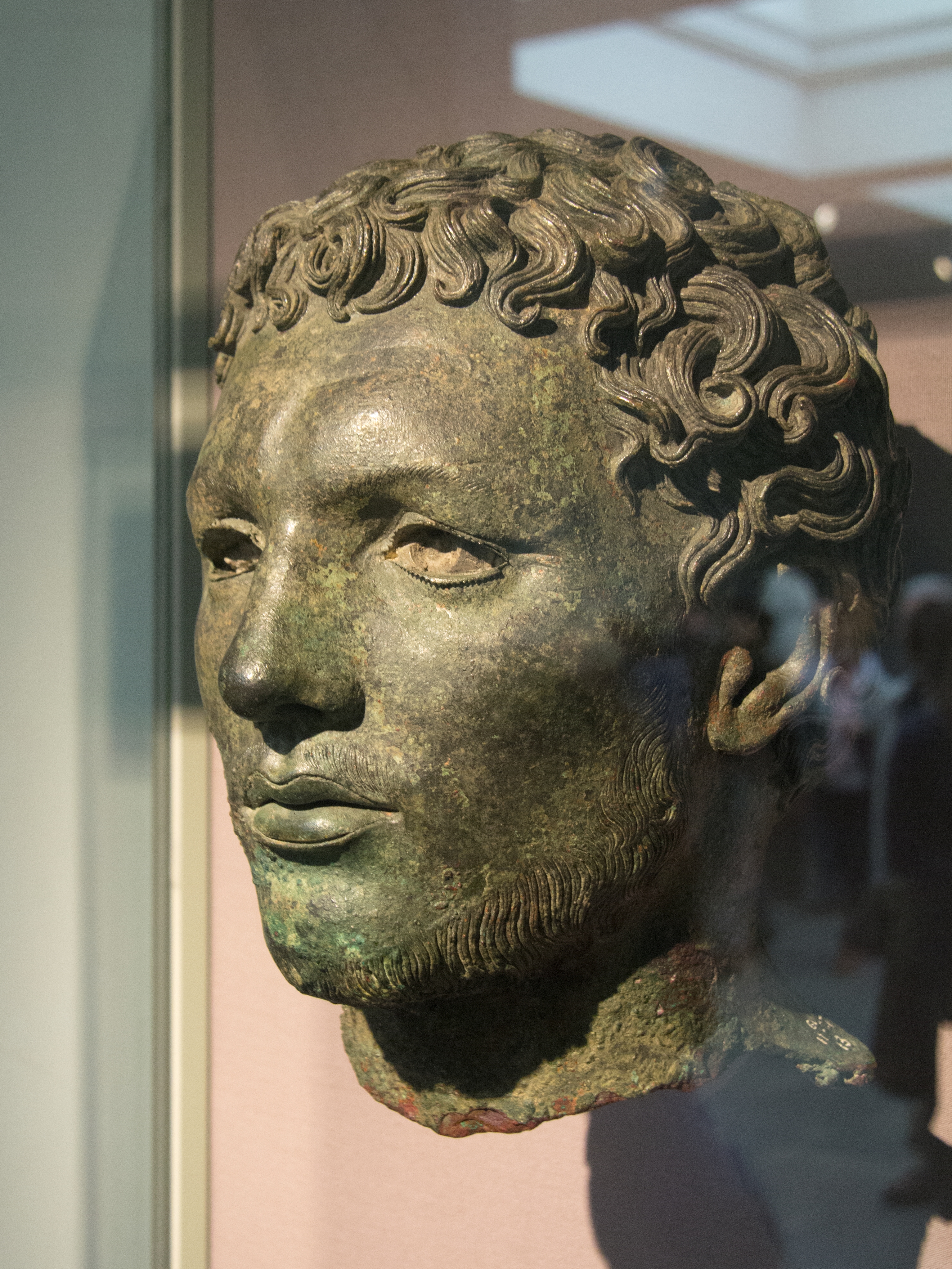
Mastanabal
Cultured King of Numidia and son of Masinissa, father of Jugurtha and Gauda, celebrated for winning the Panathenaic games in Athens and patronizing Greek philosophy and law.
Start typing to search worldwide archives and community tributes
Filterable archive covering centuries of intellectual, artistic, and moral contributions to the human story.
Cultured King of Numidia and son of Masinissa, father of Jugurtha and Gauda, celebrated for winning the Panathenaic games in Athens and patronizing Greek philosophy and law.
9th-century King of the Christian Nubian kingdom of Makuria who unified Nubia, patronized magnificent cathedral frescoes, and personally traveled on a historic diplomatic mission to Abbasid Baghdad in 836 CE.
5th-century Christian King of the Nobatae who established the medieval Kingdom of Nobatia and inscribed his legendary Greek triumphal inscription at the Temple of Kalabsha.
Last Nubian Pharaoh of the Twenty-fifth Dynasty of Egypt who marched north from Napata to reclaim Memphis from the Assyrian Empire in 664 BCE, immortalized in the Dream Stele.
Prominent early Christian prophet and teacher mentioned in the biblical Acts of the Apostles (13:1), who co-founded the multi-ethnic Church of Antioch and consecrated Paul and Barnabas for their missions.
Hellenistic Jewish historian of Cyrene who composed the monumental five-volume Greek history of the Maccabean Revolt against the Seleucid Empire, the primary source for the biblical Second Book of Maccabees.
Cyrenaic philosopher from Libya who reformed hedonist ethics by championing altruism, friendship, and patriotism, famously paying the ransom to liberate Plato from slavery in Aegina.
Cyrenaic philosopher nicknamed Peisithanatos ('the Death-Persuader') whose lectures on the futility of human suffering in Alexandria were banned by King Ptolemy II Philadelphus.
Radical 4th-century BCE Cyrenaic philosopher from Cyrene who denied the existence of traditional Olympian gods and served as court philosopher and ambassador to Ptolemy I of Egypt.
6th-century Alexandrian Greek merchant voyager whose sea journeys across the Red Sea, the Horn of Africa (Aksum), India, and Sri Lanka produced the Christian Topography.
5th-century Greek epic poet from Akhmim, Upper Egypt, who authored the Dionysiacaโat 48 books the longest surviving poem from classical antiquityโand a hexameter paraphrase of the Gospel of John.
Alexandrian scholar and chief librarian of the Great Library of Alexandria, author of the Argonautica, the only surviving Hellenistic epic poem, which profoundly influenced Virgil's Aeneid.
Master royal architect, astronomer, and confidant to Queen Hatshepsut who designed the architectural wonder of Deir el-Bahari and the earliest known celestial star map in world history.
Master architect and sage to Pharaoh Amenhotep III who designed the Colossi of Memnon and the Luxor Temple complex, worshipped for a millennium as a patron god of medicine and wisdom.
Senior North African bishop who cast the opening vote at the landmark Council of Carthage in 256 CE alongside Saint Cyprian, articulating African conciliar independence.
Carthaginian general who commanded the garrison of Lilybaeum during the First Punic War and courageously attempted to negotiate peaceful payment with mutinous mercenary armies.
Master Carthaginian naval admiral who inflicted the most crushing maritime defeat on the Roman Republic at the Battle of Drepana in 249 BCE during the First Punic War.
Carthaginian military commander who defeated Publius Cornelius Scipio in Hispania, forged the fateful alliance with King Syphax of Numidia, and was the father of Queen Sophonisba.