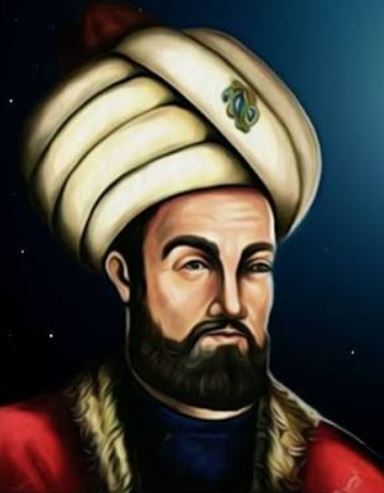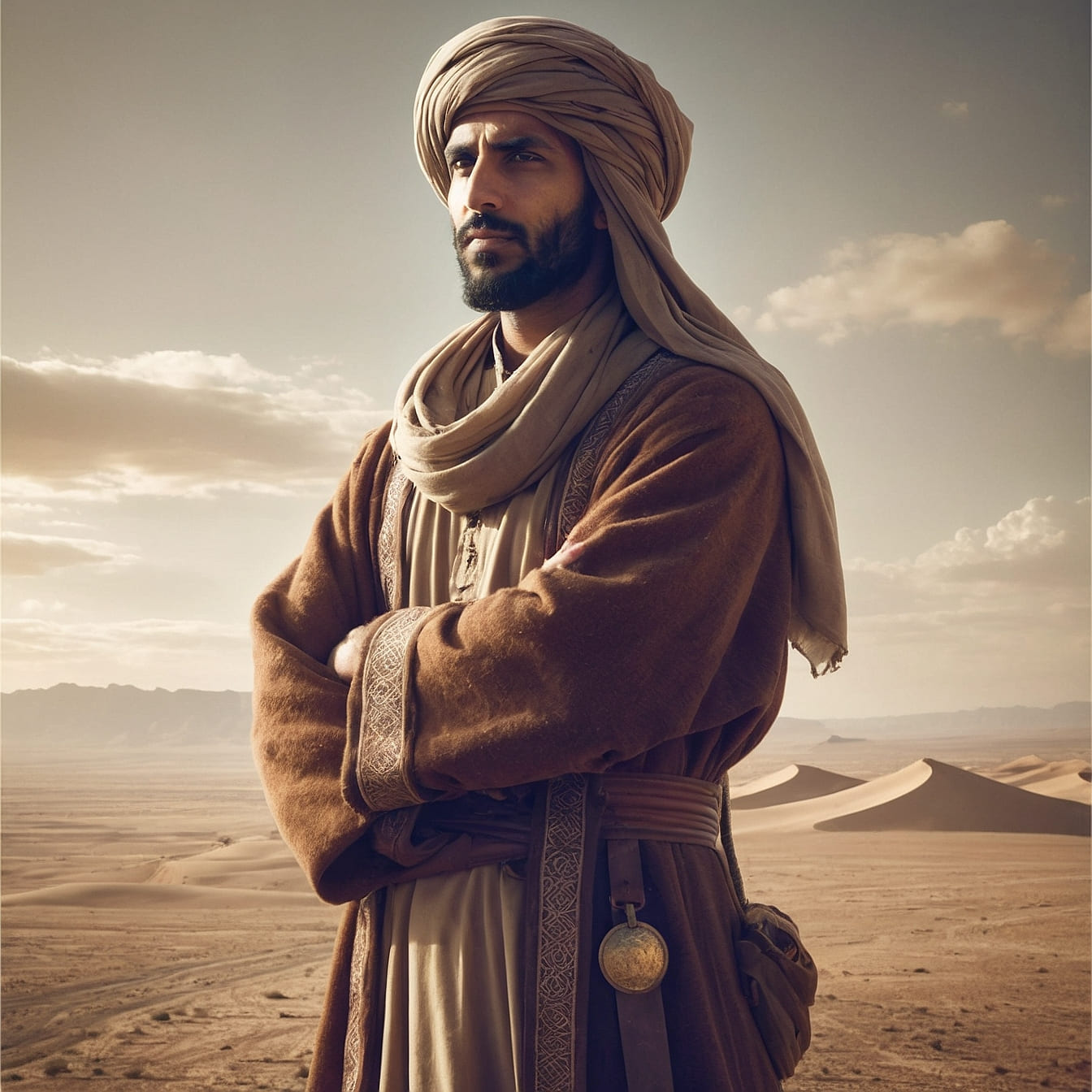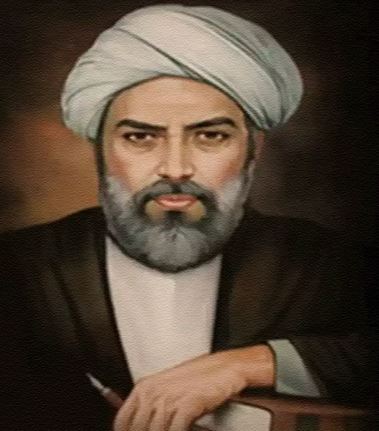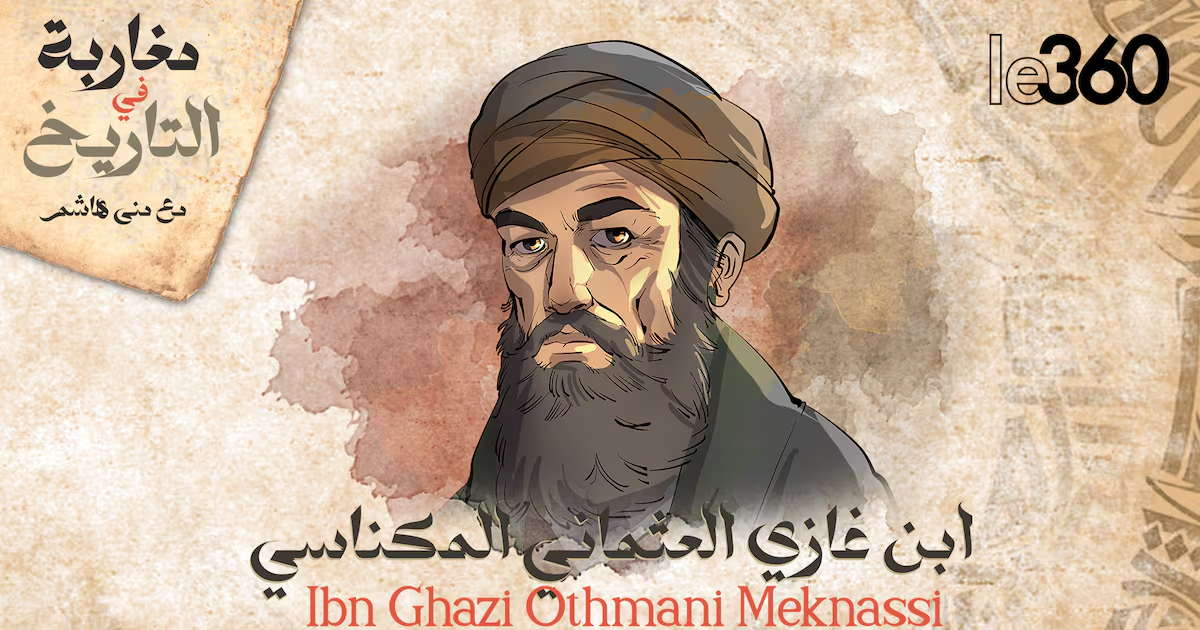
Ibn Ghazi al-Miknasi
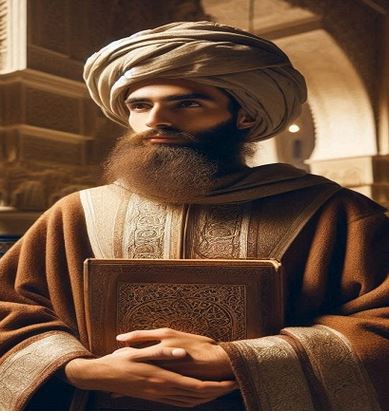
Polymathic 15th-century scholar of Meknes and Fez who held the chair of mathematics and Maliki law at the University of al-Qarawiyyin, author of the mathematical commentary Bughyat al-Tulab.
Start typing to search worldwide archives and community tributes
Filterable archive covering centuries of intellectual, artistic, and moral contributions to the human story.
Polymathic 15th-century scholar of Meknes and Fez who held the chair of mathematics and Maliki law at the University of al-Qarawiyyin, author of the mathematical commentary Bughyat al-Tulab.
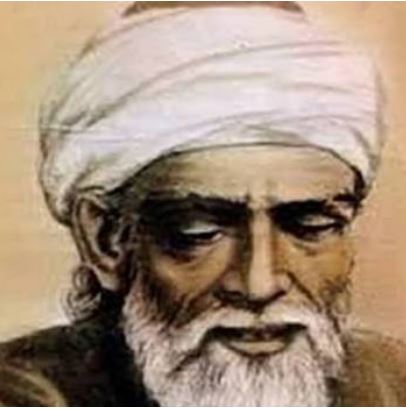
Distinguished Moroccan polymath, mathematician, and historian who served as chief Imam of al-Qarawiyyin and wrote foundational mathematical treatises and the first comprehensive history of Meknes.
Nasrid-born North African mathematician who revolutionized mathematics by inventing the world's first modern algebraic symbolic notation using Arabic characters, dying in exile in Béja, Tunisia.
Astronomer who directed the Samarkand Observatory and later served Sultan Mehmed II in Istanbul, proving that astronomy does not rely on Aristotelian physics and supporting the Earth's rotation.
Distinguished Egyptian historian of Mamluk aristocratic descent who studied under Al-Maqrizi and authored 'Al-Nujum al-Zahirah', the definitive multi-volume chronicle of Egypt from the Arab conquest to 1468.
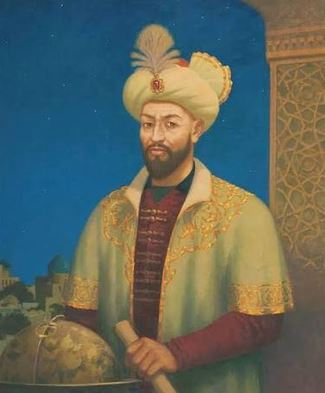
Timurid ruler and astronomer who constructed the colossal Samarkand Observatory with its 40-meter meridian sextant, producing the Zij-i Sultani star catalog of 1,018 stars.
Preeminent Egyptian Mamluk historian, topographer, and economic theorist whose 'Al-Khitat' provided the definitive architectural and urban history of Cairo and whose 'Ighathat al-Umma' analyzed economic inflation.
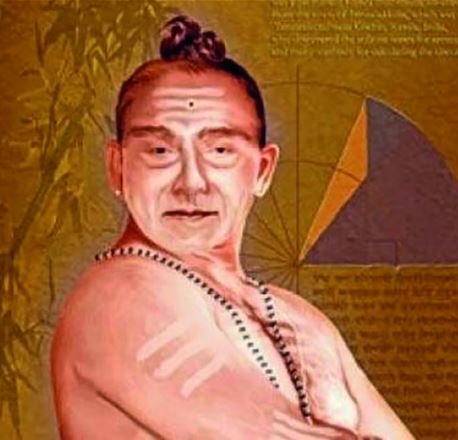
Founder of the Kerala School of Astronomy and Mathematics who discovered infinite power series expansions for sine, cosine, and arctangent (the Madhava-Leibniz series) 250 years before Newton.
Preeminent 15th-century Moroccan astronomer and chief timekeeper (Muwaqqit) of the University of al-Qarawiyyin in Fez, author of the authoritative astronomical treatise Rawdat al-Azhar.
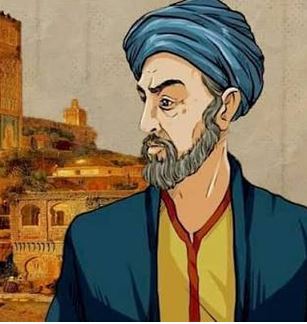
Preeminent 14th-century Algerian polymath, astronomer, and Chief Judge of Constantine whose astronomical treatises on planetary conjunctions and historical chronicles documented Hafsid North Africa.
Towering 14th-century polymath from Constantine who wrote seminal treatises on planetary astronomy, arithmetic, Maliki law, and chronological history.
Universally recognized as the greatest traveler of the pre-modern world, Ibn Battuta journeyed over 73,000 miles across Africa, the Middle East, Central Asia, India, and China, dictating the immortal Rihla.
Egyptian Mamluk polymath, financial administrator, and encyclopedist who authored 'Nihayat al-Arab fi Funun al-Adab', a monumental thirty-three-volume encyclopedia preserving medieval Islamic science, history, and administration.
Brilliant Moroccan mathematician and astronomer who introduced innovative algebraic notation, combinatorial formulas, and fractions in his masterwork 'Talkhis A'mal al-Hisab', honored with a lunar crater named Al-Marrakushi.
Islamic physician and polymath who spent his career in Cairo as Chief Physician of Egypt, celebrated for discovering the pulmonary circulation of blood three centuries before William Harvey.
Syrian-Egyptian physician and chief of Cairo's hospital who discovered pulmonary transit (lesser blood circulation) 300 years before William Harvey and Michael Servetus, refuting Galen.
Greatest botanist and pharmacologist of the Middle Ages who cataloged 1,400 medicinal plants, foods, and drugs in his encyclopedic Compendium on Simple Medicaments and Foods.
Chief engineer of the Artuqid palace who invented the crankshaft, camshaft, suction pumps, programmable musical automata, and the monumental Elephant Water Clock.