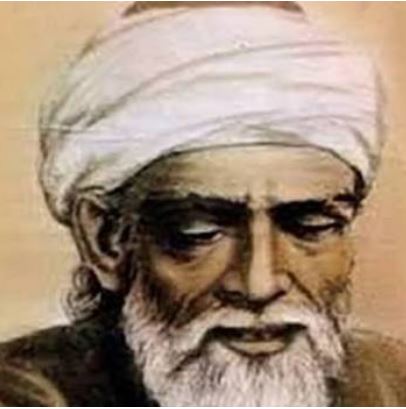
Archival Overview
Nasrid-born North African mathematician who revolutionized mathematics by inventing the world's first modern algebraic symbolic notation using Arabic characters, dying in exile in Béja, Tunisia.
Biographical Record
Abu al-Hasan Ali ibn Muhammad al-Qalasadi (1412–1486) was born in Baza, al-Andalus. Following Christian conquests, he crossed the Mediterranean to North Africa, studying and lecturing in Tlemcen, Fez, and Tunis, before serving as an esteemed Maliki legal scholar in the Hafsid capital.
Al-Qalasadi achieved an extraordinary breakthrough in mathematics in his treatise Kashf al-Asrar 'an 'Ilm al-Ghubar (Unveiling the Secrets of the Science of Dust/Arithmetic). For the first time in history, he introduced short alphabetical symbols for mathematical operations: 'sh' (shin) for the unknown variable (shay'), 'm' (mim) for square (murabba'), 'j' (jim) for square root (jadhr), and '=' (the letter lam-alif) for equality, laying the foundation of modern mathematical notation.
Key Life Milestones
Invention of Algebraic Symbolic Notation
Introduced mathematical symbols for variables, roots, and equality, pre-dating François Viète by a century.
Publication of Kashf al-Asrar
Published his masterwork on arithmetic and algebraic methods taught throughout North Africa.
Memorial Guestbook & Tributes
0 messages recordedLeave a Respectful Tribute
Final Resting Place
Perpetual MemorialBéja, Tunisia