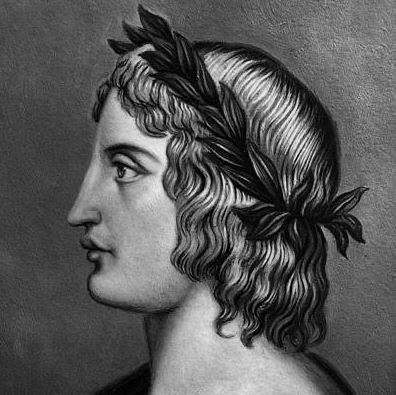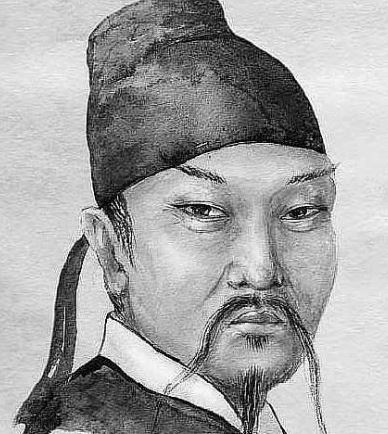
Li Bai (Li Po)
Supreme lyric poet of China's Golden Tang Dynasty, revered as the 'Poet Immortal' (Shixian), whose luminous verses on wine, the moon, friendship, and untamed nature defined Chinese poetic consciousness.
Start typing to search worldwide archives and community tributes
Filterable archive covering centuries of intellectual, artistic, and moral contributions to the human story.
Supreme lyric poet of China's Golden Tang Dynasty, revered as the 'Poet Immortal' (Shixian), whose luminous verses on wine, the moon, friendship, and untamed nature defined Chinese poetic consciousness.
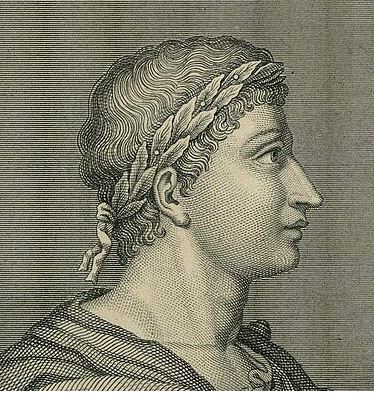
Brilliant Roman poet whose 15-book epic Metamorphoses provided the definitive mythological handbook for Renaissance painting, sculpture, and European literature, despite his tragic exile by Augustus.
Foremost Roman poet of classical antiquity whose national epic, the Aeneid, celebrated Rome's mythical Trojan origin and moral destiny with unmatched melancholic elegance and linguistic perfection.
Celebrated 4th-century BCE Athenian sculptor who introduced sensual grace, naturalism, and the revolutionary Praxitelean S-curve into Greek marble sculpture, creating the renowned Aphrodite of Knidos.
Supreme Greek sculptor of the Golden Age of Athens, artistic overseer of the Parthenon, creator of the colossal Athena Parthenos and the Statue of Zeus at Olympia (one of the Seven Wonders of the Ancient World).
Classical Greek sculptor and bronze master who formulated the Canonโthe mathematical system of ideal human anatomical proportionsโand created the iconic Doryphoros (Spear-Bearer).
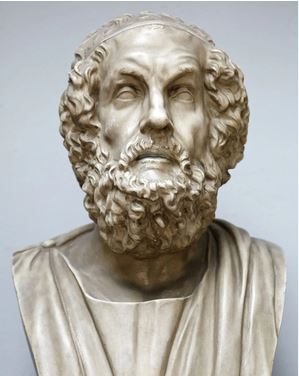
Legendary archaic Greek epic poet whose Iliad and Odyssey stand as the foundational masterworks of Western literary and narrative art, celebrating heroism, human pathos, and divine destiny.
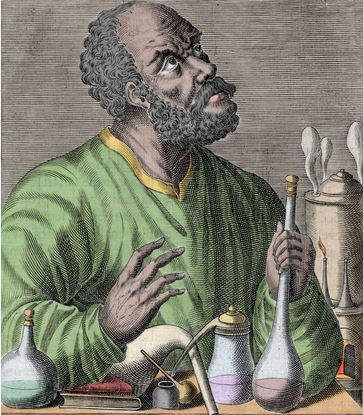
Foremost alchemist of the Islamic Golden Age who transformed alchemy into systematic experimental chemistry, inventing the alembic, discovering hydrochloric and nitric acids, and distillation.
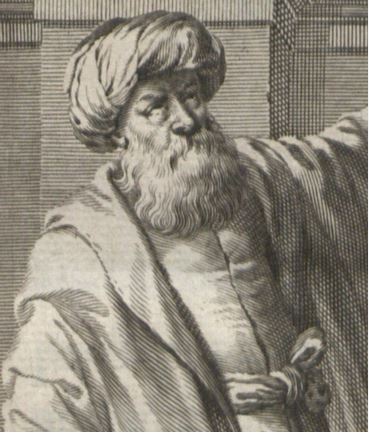
Pioneer of modern optics and the experimental scientific method whose Book of Optics (Kitab al-Manazir) proved that vision occurs when light rays enter the eye and explained the camera obscura.
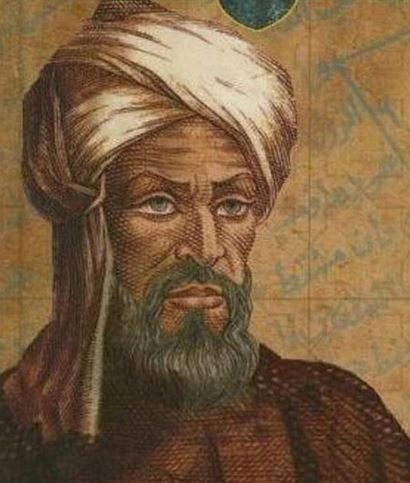
Persian polymath at Baghdad's House of Wisdom who founded algebra (al-jabr), gave his name to the 'algorithm', and introduced Hindu-Arabic numerals and decimal positional notation to the West.
Genius astronomer and mathematician who formulated the mathematical rules of zero (shunya) as a number, operations with negative numbers, and the Brahmagupta formula for cyclic quadrilaterals.
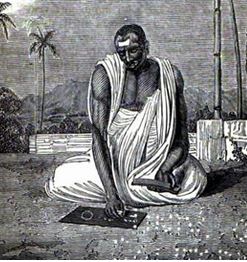
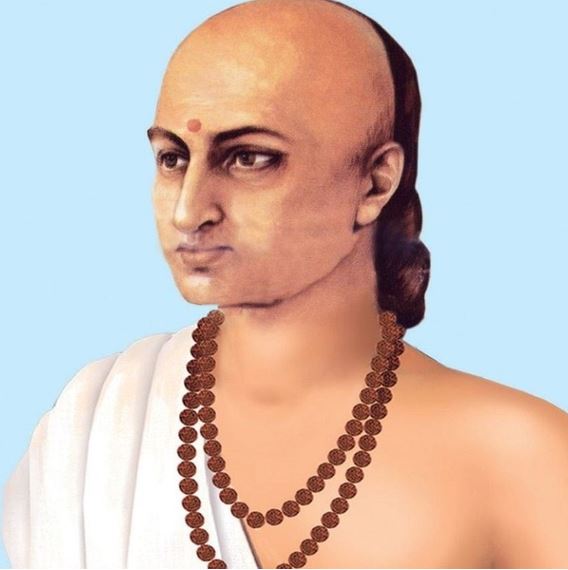
Master of Gupta Dynasty mathematics and astronomy whose Aryabhatiya introduced trigonometry (sine tables), calculated Pi to 3.1416, and proved the Earth rotates on its axis.
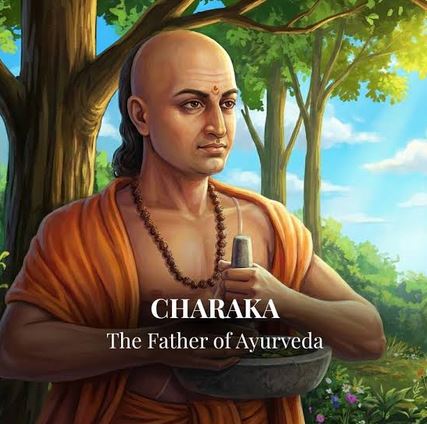
Ancient Indian physician and philosopher who compiled the Charaka Samhita, the foundational treatise of Ayurvedic internal medicine, cellular biology, and medical ethics.
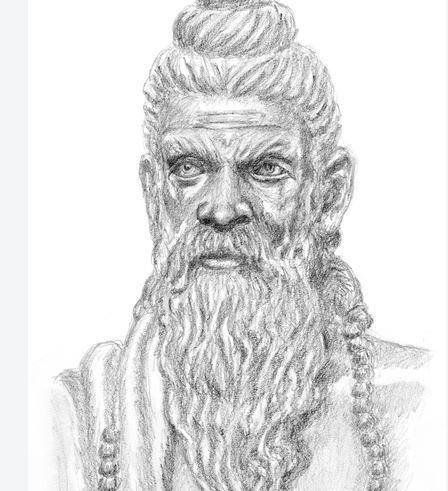
Ancient Indian surgeon hailed as the 'Father of Plastic Surgery', whose Sanskrit compendium Sushruta Samhita detailed rhinoplasty forehead flaps, cataract couching, and 121 surgical instruments.
Brilliant Greco-Egyptian engineer and geometer who invented the aeolipile (the world's first steam engine), automatic temple doors, programmable theater automata, and Heron's formula.
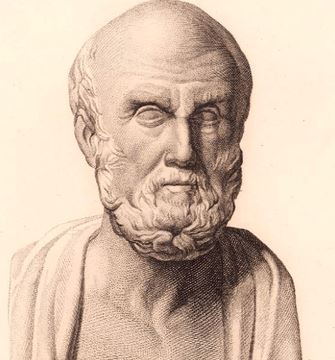
'Father of Medicine' who liberated healing from superstition, established clinical observation of symptoms, and created the foundational medical code of ethics: the Hippocratic Oath.
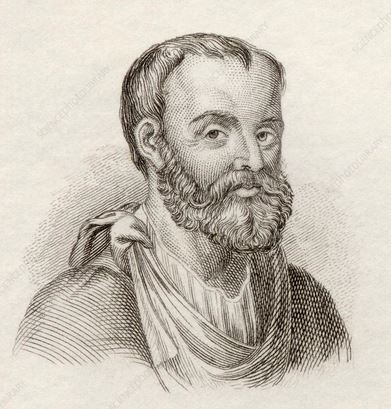
Preeminent physician of the Roman Empire whose experimental anatomical vivisections, surgical techniques, and humoral pharmacology dominated Western and Islamic medicine for 1,500 years.
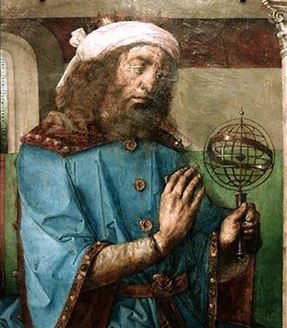
Greco-Egyptian polymath whose monumental astronomical treatise, the Almagest, and Geographia defined celestial mechanics and global cartography for fourteen centuries.