 Austria
•
1,558 views
Austria
•
1,558 views
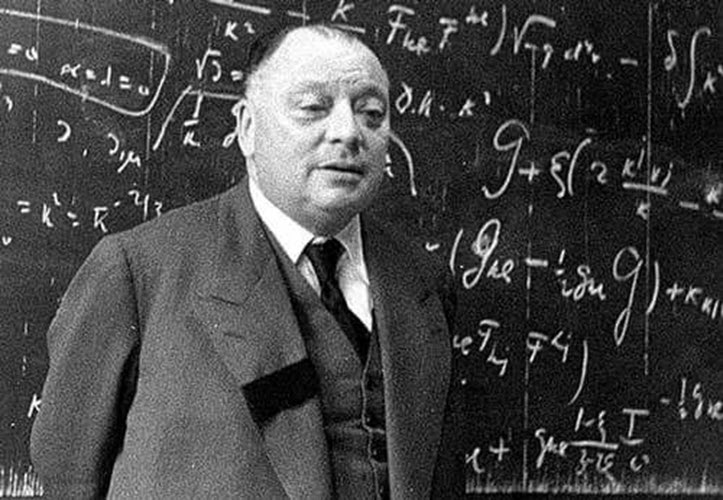
Wolfgang Pauli

Vienna, Austria
Archival Overview
Brilliant theoretical physicist who formulated the Pauli exclusion principle and predicted the existence of the neutrino.
Biographical Record
Wolfgang Ernst Pauli was an Austrian-born Swiss-American theoretical physicist whose sharp intellect, rigorous critical standards, and devastating critiques earned him the nickname 'the conscience of physics'. A child prodigy, Pauli wrote a comprehensive 200-page monograph on Einstein's general relativity at age twenty-one that drew glowing praise from Einstein himself.
In 1925, Pauli formulated the fundamental Pauli exclusion principle, stating that no two identical fermions can occupy the same quantum state simultaneously, providing the structural explanation for the periodic table of elements and atomic electron shells, for which he received the 1945 Nobel Prize in Physics nominated by Einstein. In 1930, to explain the continuous energy spectrum in beta decay without violating conservation of energy, Pauli proposed the existence of an elusive, neutral, nearly massless particle later named the neutrino. He was also famous for the humorous 'Pauli effect', wherein delicate laboratory apparatus supposedly broke down in his mere presence.
Key Life Milestones
The Pauli Exclusion Principle
Formulated the quantum law governing electron shell structures and preventing matter from collapsing upon itself.
Prediction of the Neutrino
Postulated the existence of an uncharged, massless particle to preserve the laws of conservation of energy in beta decay.
Memorial Guestbook & Tributes
0 messages recordedLeave a Respectful Tribute
Final Resting Place
Perpetual MemorialZollikon, Zurich, Switzerland