 United States
•
8 views
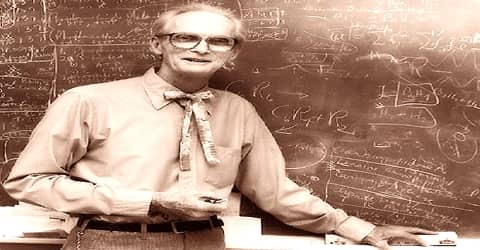
William Lipscomb

Cleveland, United States
Archival Overview
Eminent American chemist awarded the 1976 Nobel Prize in Chemistry for his groundbreaking structural and theoretical studies of borane chemical bonding.
Biographical Record
William Nunn Lipscomb Jr. grew up in Lexington, Kentucky, and earned his doctorate from Caltech under Linus Pauling. He served on the faculty of the University of Minnesota before becoming a long-serving professor of chemistry at Harvard University in 1959.
Lipscomb unraveled the complex three-dimensional bonding of boron hydrides (boranes) using low-temperature X-ray crystallography, introducing the concept of three-center two-electron bonds. His structural methodologies also revolutionized protein crystallography, revealing the detailed structures of carboxypeptidase A and other major biological enzymes.
Key Life Milestones
Elucidation of Boron Hydride Structures
Formulated the topological theory of bonding in boranes, resolving long-standing chemical paradoxes.
Nobel Prize in Chemistry
Solely awarded the Nobel Prize in Chemistry for his studies on the structure of boranes illuminating problems of chemical bonding.
Memorial Guestbook & Tributes
0 messages recordedLeave a Respectful Tribute
Final Resting Place
Perpetual MemorialCambridge, United States