 United Kingdom
•
1 views
United Kingdom
•
1 views
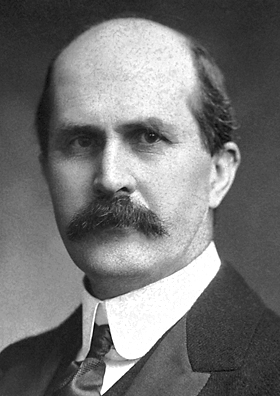
William Henry Bragg

Wigton (Cumberland), United Kingdom
Archival Overview
British physicist and mineralogist who co-invented X-ray crystallography with his son Lawrence Bragg, winning the 1915 Nobel Prize in Physics for deciphering crystal lattice structures.
Biographical Record
William Henry Bragg (1862–1942) served as professor of mathematics and physics at Adelaide, Australia, before returning to Leeds and the Royal Institution in London. In 1913, he designed the X-ray spectrometer to measure diffraction patterns produced by crystalline lattices.
Working alongside his twenty-two-year-old son Lawrence, he solved the atomic structures of rock salt, diamond, and calcite. The elder Bragg became a passionate popularizer of science and directed Britain's acoustic submarine detection program during World War I.
Key Life Milestones
Invention of the X-Ray Spectrometer
Designed the instrument that measured X-ray diffraction patterns from crystals.
Nobel Prize in Physics
Awarded the Nobel Prize jointly with his son Lawrence for services in analyzing crystal structures using X-rays.
Memorial Guestbook & Tributes
0 messages recordedLeave a Respectful Tribute
Final Resting Place
Perpetual MemorialWigton (Cumbria), United Kingdom