 Great Britain
•
7 views
Great Britain
•
7 views
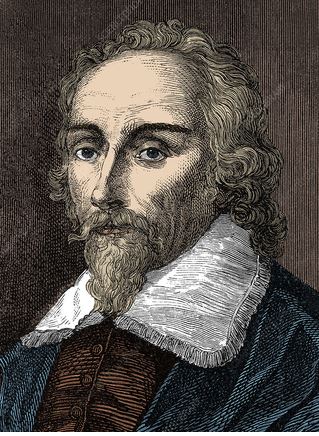
William Harvey

Folkestone (Kent), Great Britain
Archival Overview
English physician whose 1628 masterwork De Motu Cordis proved the complete systemic circulation of blood pumped continuously by the heart in a closed circuit throughout the body.
Biographical Record
William Harvey (1578–1657) studied under Fabricius at the University of Padua before returning to London as physician to St Bartholomew's Hospital and personal physician to Kings James I and Charles I. In 1628 in Frankfurt, he published his revolutionary treatise, Exercitatio Anatomica de Motu Cordis et Sanguinis in Animalibus (*On the Motion of the Heart and Blood*).
Through quantitative measurement, Harvey demonstrated that the left ventricle pumps so much blood in an hour (surpassing the body's entire weight) that the blood must circulate continuously in a closed loop through arteries to the tissues and return via veins to the heart. He predicted the existence of microscopic capillaries (confirmed by Malpighi in 1661) and established embryology in *De Generatione Animalium*.
Key Life Milestones
Publication of 'De Motu Cordis'
Demonstrated through quantitative physiological experiment that blood circulates continuously in a closed vascular circuit.
Publication of 'De Generatione Animalium'
Pioneered modern embryology with the foundational biological doctrine: 'Ex ovo omnia' (all life comes from an egg).
Memorial Guestbook & Tributes
0 messages recordedLeave a Respectful Tribute
Final Resting Place
Perpetual MemorialHempstead (Essex), United Kingdom