 Russia
•
7 views
Russia
•
7 views
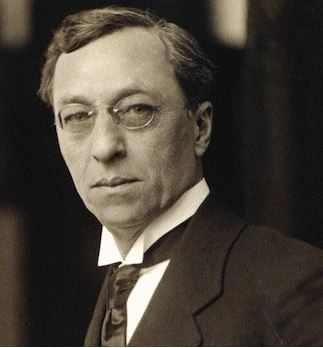
Wassily Wassilyevich Kandinsky

Moscow, Russia
Archival Overview
Visionary Russian painter and Bauhaus master universally recognized as the pioneer of pure non-objective abstract art, who linked visual color and geometry to musical synesthesia in his landmark treatise Concerning the Spiritual in Art.
Biographical Record
Wassily Kandinsky (1866–1944) abandoned a promising career in law and economics at age thirty after experiencing an epiphany at an Impressionist exhibition in Moscow. Moving to Munich, he co-founded the influential expressionist group Der Blaue Reiter (The Blue Rider) in 1911 with Franz Marc.
Gifted with synesthesia (seeing sound and hearing color), Kandinsky believed art should bypass material representation to vibrate directly upon the human soul, exactly like music. In 1910–1911, he painted what is celebrated as the first purely non-representational abstract watercolor. His theoretical treatise Concerning the Spiritual in Art (1911) and his monumental Compositions and Improvisations founded abstract painting, which he taught as a revered master at the Bauhaus from 1922 to 1933.
Key Life Milestones
Publication of Concerning the Spiritual in Art
Published his seminal treatise establishing the philosophical, emotional, and synesthetic foundations of pure abstract art.
Composition VII
Completed his monumental non-objective oil canvas Composition VII, regarded as the ultimate peak of early abstract expressionism.
Memorial Guestbook & Tributes
0 messages recordedLeave a Respectful Tribute
Final Resting Place
Perpetual MemorialNeuilly-sur-Seine (Paris), France