 German Empire (Germany)
•
3,697 views
German Empire (Germany)
•
3,697 views
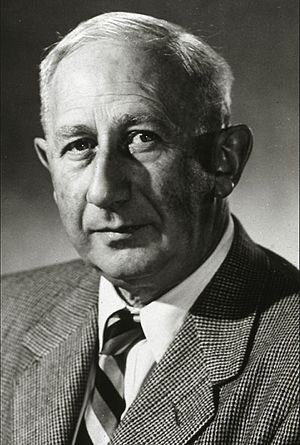
Walter Baade

Schröttinghausen, Westphalia, German Empire (Germany)
Archival Overview
German astronomer who discovered stellar populations I and II, doubling the calculated size and age of the universe.
Biographical Record
Wilhelm Heinrich Walter Baade was a German observational astronomer whose sharp eyes and ingenious exploitation of wartime blackout conditions recalibrated the entire cosmic distance scale. Emigrating to the United States in 1931 to work at Mount Wilson and Palomar Observatories, Baade was classified as an enemy alien during World War II. While other astronomers left for military ballistics work, Baade was granted near-exclusive access to the 100-inch telescope, capitalizing on the darkened skies of wartime Los Angeles.
Resolving stars in the central nucleus of the Andromeda Galaxy for the first time, Baade realized stars belong to two distinct generations: young, metal-rich Population I stars in spiral arms, and old, metal-poor Population II stars in galactic bulges and globular clusters. Recognizing that Edwin Hubble had conflated two types of Cepheids with different period-luminosity curves, Baade announced at the 1952 Rome IAU meeting that galaxies were twice as far away and the universe twice as old as previously thought. With Fritz Zwicky, he also coined the term 'supernova' and predicted neutron stars.
Key Life Milestones
Discovery of Stellar Populations I and II
Resolved the nucleus of the Andromeda Galaxy under wartime blackouts, discovering two distinct generations of stars.
Doubling the Scale of the Universe
Announced at the IAU Rome meeting that Cepheid recalibration doubled the estimated distance to Andromeda and the cosmic age.
Memorial Guestbook & Tributes
0 messages recordedLeave a Respectful Tribute
Final Resting Place
Perpetual MemorialBad Salzuflen, North Rhine-Westphalia, Germany