 Great Britain
•
10 views
Great Britain
•
10 views
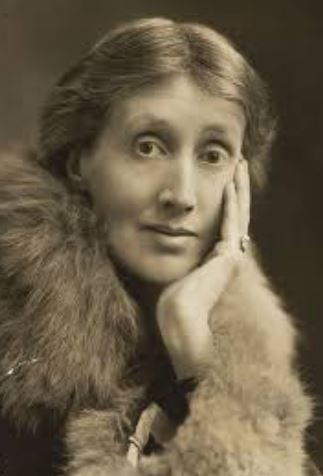
Adeline Virginia Woolf (née Stephen)

Kensington (London), Great Britain
Archival Overview
Foremost British modernist novelist and pioneering feminist essayist whose stream-of-consciousness triumphs Mrs Dalloway and To the Lighthouse, alongside her rallying manifesto A Room of One's Own ('five hundred a year and a room of her own'), reshaped 20th-century consciousness.
Biographical Record
Virginia Woolf (1882–1941), daughter of Victorian scholar Sir Leslie Stephen, was the radiant intellectual nucleus of the legendary Bloomsbury Group. In 1917, alongside her husband Leonard Woolf, she co-founded the Hogarth Press in their dining room, publishing groundbreaking works by T.S. Eliot, Sigmund Freud, and Katherine Mansfield.
Woolf dismantled Victorian linear storytelling, replacing external plot with the luminous shimmering halo of psychological impression. In Mrs Dalloway (1925), To the Lighthouse (1927), and the gender-shifting biography Orlando (1928), she captured the fluid, fragile nature of human time and memory. Her 1929 feminist manifesto A Room of One's Own established the foundational economic argument for women's artistic independence: 'A woman must have money and a room of her own if she is to write fiction.' Struggling with recurrent bipolar depression and terrified of the Nazi blitz of Sussex, she drowned herself in the River Ouse at fifty-nine.
Key Life Milestones
Publication of Mrs Dalloway
Published her masterpiece chronicling a single June day in post-WWI London through Clarissa Dalloway and Septimus Smith.
Publication of A Room of One's Own
Delivered and published her epochal feminist essay arguing for women's creative and economic independence.
Memorial Guestbook & Tributes
0 messages recordedLeave a Respectful Tribute
Final Resting Place
Perpetual MemorialRiver Ouse (near Rodmell, Sussex), Great Britain