 United States
•
3,568 views
United States
•
3,568 views
Vera Rubin

Philadelphia, Pennsylvania, United States
Archival Overview
Pioneering astronomer whose measurements of galaxy rotation rates provided the first robust empirical evidence for dark matter.
Biographical Record
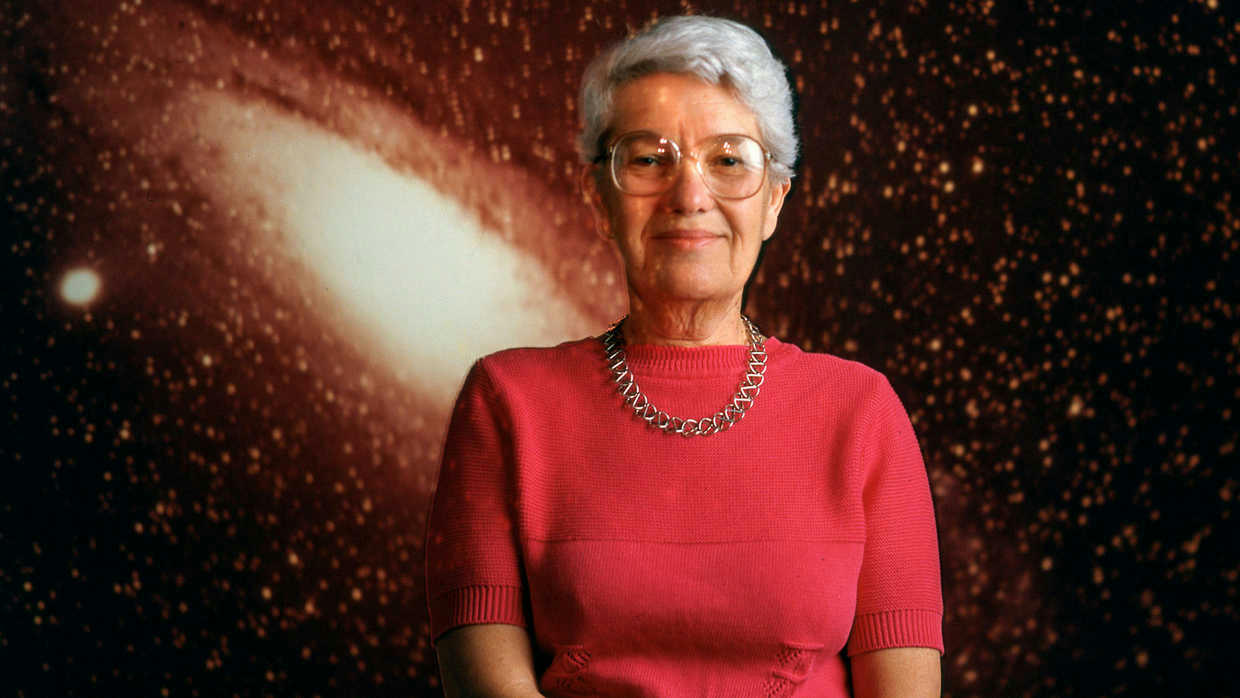
Vera Florence Cooper Rubin was an American astronomer whose meticulous spectrographic measurements transformed our understanding of the cosmos, proving that ninety percent of the universe's mass is invisible. Overcoming pervasive gender discrimination—including initially being barred from prestigious observatories—Rubin earned her doctorate at Georgetown University under George Gamow.
Working with instrument designer Kent Ford at the Carnegie Institution of Washington, Rubin measured the rotational velocities of stars and gas clouds in spiral galaxies using a sensitive spectrograph. According to Newtonian mechanics, stars near galactic edges should orbit more slowly than those near the dense core. Instead, Rubin discovered flat rotation curves: stars at the outermost perimeters travel just as rapidly as inner stars. This demonstrated that galaxies are embedded in massive halos of unseen, non-luminous matter—providing the decisive observational evidence for the existence of dark matter. The Vera C. Rubin Observatory in Chile commemorates her enduring legacy.
Key Life Milestones
Discovery of Flat Rotation Curves
Published observational rotation data for the Andromeda Galaxy, demonstrating unexpected high velocities at outer edges.
National Medal of Science
Awarded the National Medal of Science by President Bill Clinton for her pioneering contributions to observational cosmology and dark matter.
Memorial Guestbook & Tributes
0 messages recordedLeave a Respectful Tribute
Final Resting Place
Perpetual MemorialWashington, D.C., United States