 China
•
23 views
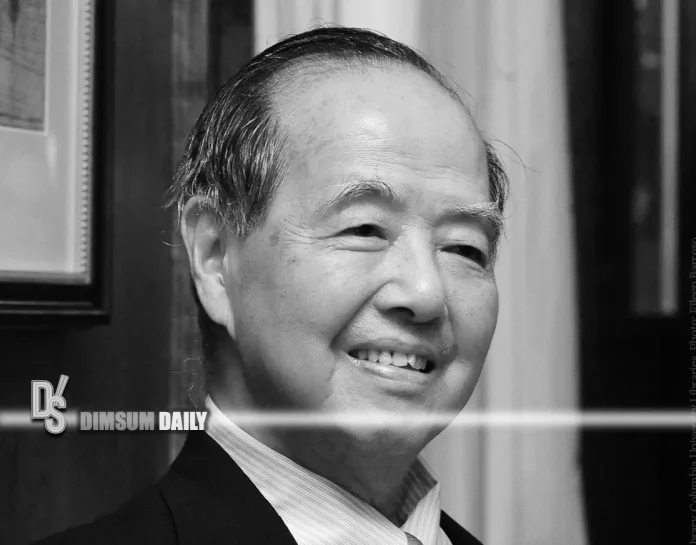
Tsung-Dao Lee

Shanghai, China
Archival Overview
Chinese-American theoretical physicist who at age 30 became one of the youngest Nobel laureates in history when he and Chen Ning Yang proved the violation of parity conservation in weak nuclear interactions, overthrowing a fundamental tenet of physics.
Biographical Record
Tsung-Dao Lee was born in Shanghai and undertook his early university studies in China during the Second Sino-Japanese War before receiving a scholarship to the University of Chicago, where he completed his PhD under Enrico Fermi in 1950. Lee rapidly made a name for himself as a brilliant mathematical physicist, joining Columbia University in 1953, where he spent most of his academic career.
In 1956, Lee and his long-time collaborator Chen Ning Yang investigated the "theta-tau puzzle" and daringly hypothesized that the law of parity conservation—the idea that nature treats left and right symmetrically—does not hold in weak nuclear interactions. Their theory was experimentally verified months later by Chien-Shiung Wu, and Lee and Yang were awarded the 1957 Nobel Prize in Physics. Lee also made foundational contributions to quantum field theory, non-topological solitons, relativistic heavy-ion physics, and worked extensively to build educational bridges between China and the international scientific community through the CUSPEA program.
Key Life Milestones
Prediction of Parity Non-Conservation
Published a seminal paper with Chen Ning Yang proposing that parity symmetry is violated in weak nuclear decays.
Nobel Prize in Physics
Received the Nobel Prize in Physics at age 30, becoming the second-youngest scientist to win the physics Nobel after Lawrence Bragg.
Memorial Guestbook & Tributes
0 messages recordedLeave a Respectful Tribute
Final Resting Place
Perpetual MemorialSan Francisco, United States