 Japan
•
23 views
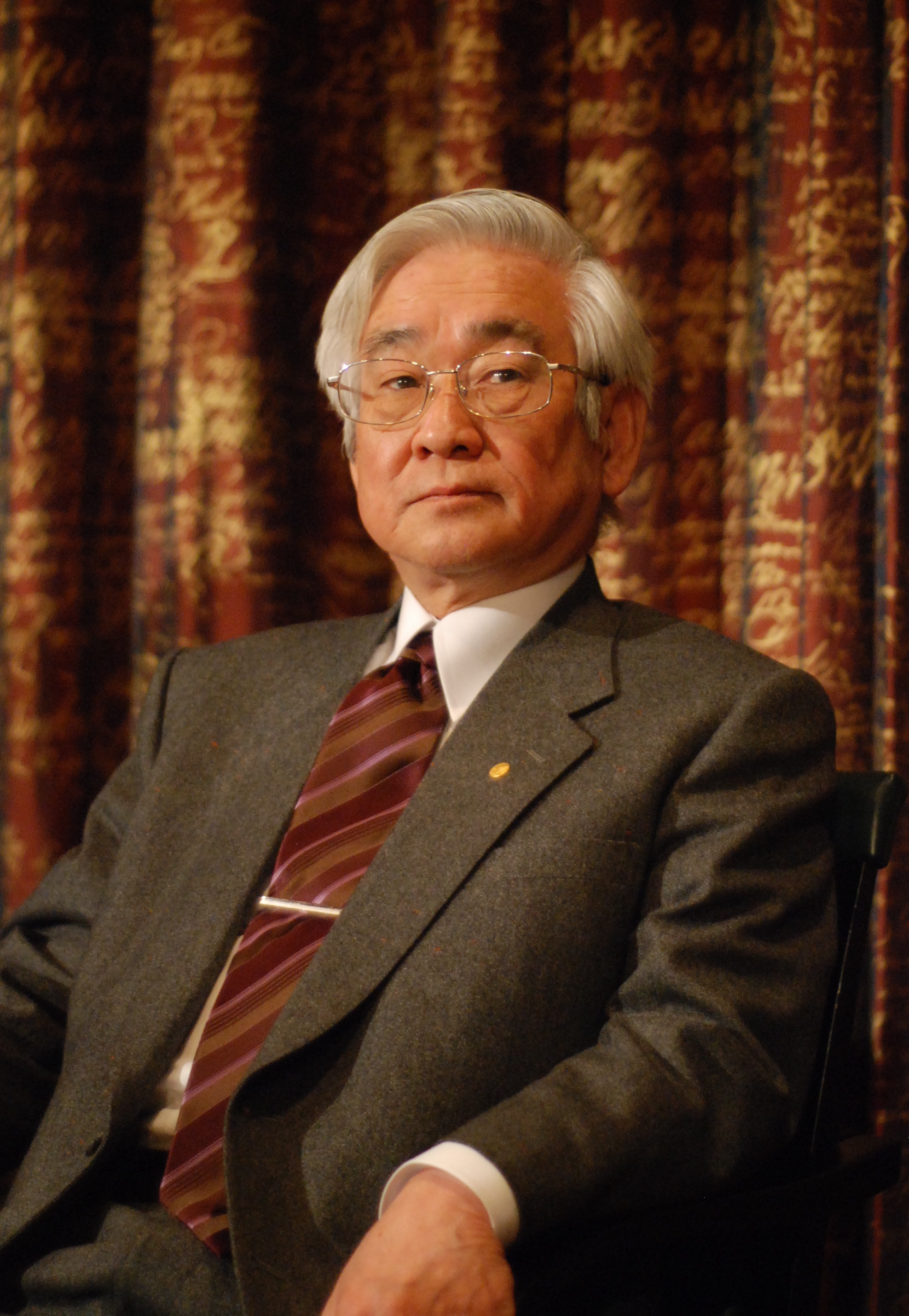
Toshihide Maskawa

Nagoya, Aichi, Japan
Archival Overview
Japanese theoretical physicist awarded the 2008 Nobel Prize in Physics for formulating the Cabibbo–Kobayashi–Maskawa (CKM) matrix with Makoto Kobayashi in 1973, which predicted the existence of three generations of quarks to explain CP violation.
Biographical Record
Toshihide Maskawa was born in Nagoya, Japan, the son of a sugar merchant, and survived the firebombing of Nagoya during World War II. Graduating from Nagoya University in 1962, he was deeply influenced by the collaborative intellectual tradition of the Sakata theoretical physics school. In 1972, Maskawa joined Kyoto University, teaming with Makoto Kobayashi.
In 1973, Kobayashi and Maskawa published their seminal paper explaining CP violation (matter-antimatter asymmetry in weak interactions). At a time when only three quarks (up, down, strange) were known, they boldly hypothesized that nature must contain at least six quark flavors (adding charm, bottom, and top) arranged in a 3x3 unitary mixing matrix—now known as the CKM matrix. Over the subsequent twenty-five years, experiments discovered the bottom (1977) and top (1995) quarks, confirming their theory. A passionate pacifist who spoke no English, he accepted the 2008 Nobel Prize in Stockholm in Japanese.
Key Life Milestones
Publication of the Kobayashi-Maskawa Paper
Published "CP-Violation in the Renormalizable Theory of Weak Interaction" predicting the existence of six quark flavors.
Nobel Prize in Physics
Awarded the Nobel Prize in Physics in Stockholm for the discovery of the origin of broken symmetry predicting at least three families of quarks.
Memorial Guestbook & Tributes
0 messages recordedLeave a Respectful Tribute
Final Resting Place
Perpetual MemorialKyoto, Japan