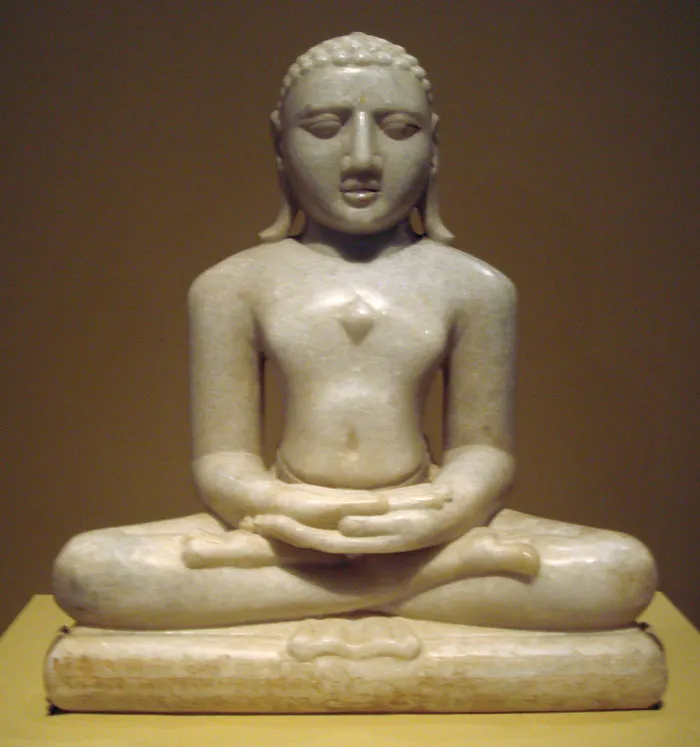
 India
•
4 views
India
•
4 views
Rishabhanatha / Adinatha (First Tirthankara of Jainism)

Ayodhya, India
Archival Overview
The first Ford-Maker (Tirthankara) of the present cosmic time cycle and founder of the Ikshvaku dynasty, Rishabhanatha taught humanity agriculture, writing, statecraft, and arts before renouncing his empire to teach universal non-violence (Ahimsa).
Biographical Record
Rishabhanatha (meaning 'The Bull Lord', also known as Adinatha or 'First Lord') is venerated in Jainism as the inaugural teacher who established the dual foundations of civilized society and spiritual liberation in our cosmic era.
Father of Human Civilization
According to ancient texts, Rishabhanatha lived when the wish-fulfilling trees (Kalpavrikshas) ceased to provide for human needs. He introduced the six essential occupations of civilization: agriculture (Asi), swordsmanship and defense (Masi), trade, crafts, arts, and writing. He taught his daughters Brahmi (the script from which Indian alphabets descend) and Sundari (mathematics), establishing educational equality.
Renunciation and Kevala Jnana
After ruling justly for millennia, the sight of a celestial dancer suddenly vanishing made him realize the ephemeral nature of all worldly glory. Dividing his kingdom between his hundred sons (including Emperor Bharata, after whom India is named Bharat), he plucked out his hair in five handfuls and entered deep silence. After one thousand years of rigorous penance, he attained Kevala Jnana (omniscience) beneath a banyan tree, establishing the fourfold Jain community (monks, nuns, laymen, and laywomen) and preaching absolute Ahimsa.
Key Life Milestones
Teaching the Crafts and Sciences of Civilization
Teaches agriculture, law, mathematics, and the Brahmi script, laying the groundwork for human society.
Attainment of Kevala Jnana & Establishing the Sangha
Attains supreme omniscience and preaches the universal law of Ahimsa, liberating thousands of souls.
Memorial Guestbook & Tributes
0 messages recordedLeave a Respectful Tribute
Final Resting Place
Perpetual MemorialMount Kailash, China