 Kingdom of Prussia
•
3 views
Kingdom of Prussia
•
3 views
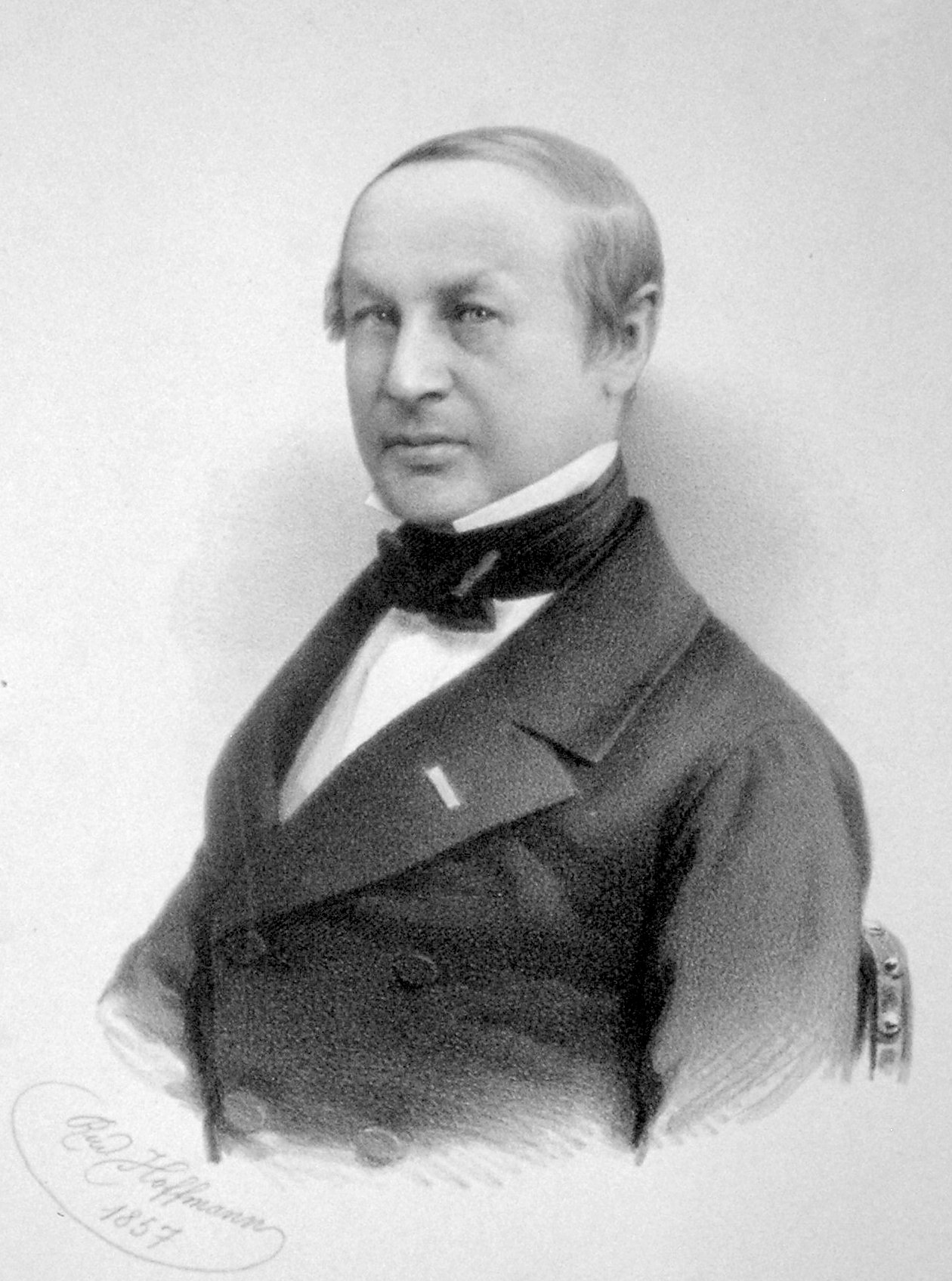
Theodor Schwann

Neuss (Rhineland), Kingdom of Prussia
Archival Overview
German physiologist who formulated the universal Cell Theory in 1839, establishing that all animal tissues are composed of cells, discovered the digestive enzyme pepsin, and discovered the myelinating Schwann cells of the peripheral nervous system.
Biographical Record
Theodor Schwann (1810–1882) worked in Berlin under Johannes Peter Muller. In 1836, studying gastric digestion, Schwann isolated pepsin—the first enzyme ever extracted from animal tissue. In 1837, he proved that alcoholic fermentation is a biological process carried out by living yeast cells rather than spontaneous chemical decomposition.
In 1839, following conversations with botanist Matthias Schleiden, Schwann published his masterpiece 'Microscopical Researches on the Accordance in the Structure and Growth of Animals and Plants', uniting zoology and botany under the grand unifying principle: 'All living organisms are composed of cells and cell products.'
Key Life Milestones
Discovery of Pepsin
Isolated and characterized pepsin, the first known animal digestive enzyme.
Publication of Universal Cell Theory
Established that all animal and plant tissues are fundamentally composed of cells, transforming biology.
Memorial Guestbook & Tributes
0 messages recordedLeave a Respectful Tribute
Final Resting Place
Perpetual MemorialCologne, Germany