 Meiji Japan
•
1 views
Meiji Japan
•
1 views
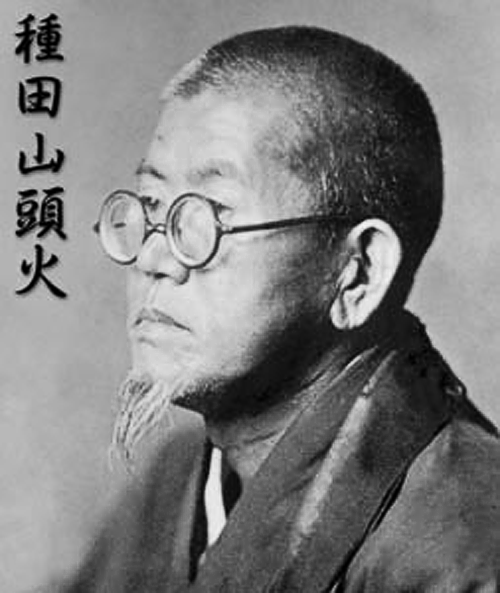
Taneda Santoka

Hofu (Yamaguchi), Meiji Japan
Archival Overview
Twentieth-century free-verse haiku poet and Zen mendicant monk (1882–1940) whose unconventional, unrhymed poems distilled the solitude of walking, begging bowls, flowing waters, and sake into spontaneous spiritual art.
Biographical Record
Born into a wealthy landowning family that collapsed into bankruptcy and family tragedy, Santoka struggled with alcoholism and mental anguish before being ordained as a Soto Zen monk in 1925. In 1926, he set out on the road as an itinerant beggar-monk, walking thousands of miles across Japan with only an iron bowl and woven sedge hat.
Santoka abandoned the rigid seventeen-syllable (5-7-5) structure and seasonal words (kigo), composing free-form, raw, and direct haiku reflecting the immediate sensory reality of walking, drinking mountain springs, and encountering blooming weeds. His travel diaries and verse cycles, published in 'The Mountain Path' (Sangyo), have inspired millions worldwide.
Key Life Milestones
Inauguration of Walking Pilgrimage
Donned monk's robes and began his epic walking journeys across southwestern Japan, subsisting on Zen alms.
Publication of The Mountain Path (Sangyo)
Printed his first independent journal of free-verse haiku, capturing radical simplicity and solitary nature.
Memorial Guestbook & Tributes
0 messages recordedLeave a Respectful Tribute
Final Resting Place
Perpetual MemorialMatsuyama (Ehime), Japan