 Sweden
•
2,822 views
Sweden
•
2,822 views
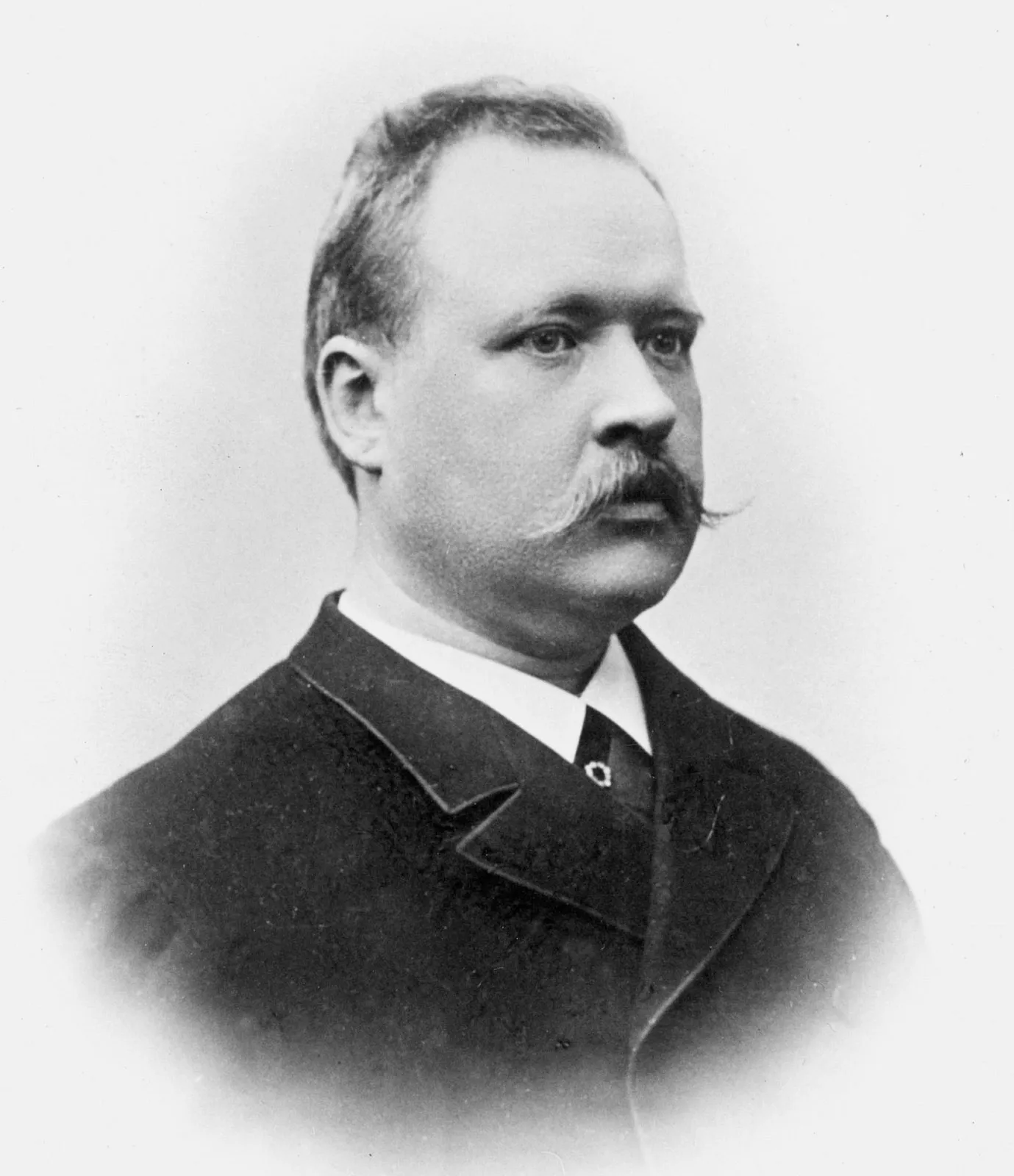
Svante Arrhenius

Vik, Uppsala, Sweden
Archival Overview
Swedish Nobel laureate who founded physical chemistry with his theory of electrolytic dissociation and first quantified CO2 global warming.
Biographical Record
Svante August Arrhenius was a Swedish physical chemist whose visionary intellect helped establish physical chemistry as an independent scientific branch. In his 1884 doctoral thesis at Uppsala University, Arrhenius proposed the theory of electrolytic dissociation: that salts break down into positively and negatively charged ions when dissolved in water, even in the absence of an electrical current. Though initially awarded the lowest passing grade by skeptical professors, his theory was embraced by Wilhelm Ostwald and J. H. van 't Hoff, winning him the 1903 Nobel Prize in Chemistry.
Arrhenius also formulated the fundamental Arrhenius equation (k = A e^(-Ea/RT)) quantifying how chemical reaction rates depend exponentially on temperature and activation energy. In 1896, Arrhenius published the world's first quantitative climate model calculating how variations in atmospheric carbon dioxide alter Earth's surface temperature, predicting that industrial coal combustion would cause human-induced global warming.
Key Life Milestones
Formulation of the Arrhenius Equation
Formulated the mathematical equation defining the temperature dependence of chemical reaction rates and activation energy.
Nobel Prize in Chemistry
Awarded the Nobel Prize in Chemistry in recognition of the extraordinary services rendered to the advancement of chemistry by his electrolytic theory of dissociation.
Memorial Guestbook & Tributes
0 messages recordedLeave a Respectful Tribute
Final Resting Place
Perpetual MemorialUppsala, Sweden