 France
•
8 views
France
•
8 views
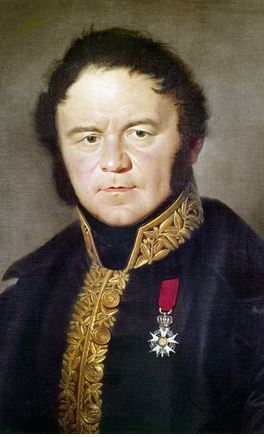
Marie-Henri Beyle (Stendhal)

Grenoble (Dauphiné), France
Archival Overview
Visionary French novelist whose spare, analytical prose and profound psychological dissections of ambition, hypocrisy, and passion in Le Rouge et le Noir (The Red and the Black) and La Chartreuse de Parme founded modern European psychological fiction.
Biographical Record
Marie-Henri Beyle (1783–1842), who adopted the pen name Stendhal, lived an extraordinary life: crossing the Alps with Napoleon Bonaparte's army, surviving the harrowing 1812 retreat from Moscow as a quartermaster, and later serving as French consul in Civitavecchia, Italy. Passionately enamored with Italy and music, Stendhal famously described the overwhelming psychosomatic ecstasy caused by sublime art (the 'Stendhal syndrome').
Rejecting flamboyant romantic rhetoric, Stendhal adopted the austere, razor-sharp clarity of the Napoleonic Code to dissect social ambition. In Le Rouge et le Noir (1830), he created Julien Sorel, the definitive anti-hero torn between the military sword ('the Red') and the clerical cassock ('the Black'). His Italian epic La Chartreuse de Parme (1839), dictated in just fifty-two days, was praised by Honoré de Balzac as a masterpiece of modern realism. Stendhal famously dedicated his works 'To the Happy Few', predicting he would not be truly appreciated until 1880 or 1935.
Key Life Milestones
Publication of Le Rouge et le Noir (The Red and the Black)
Published his supreme psychological chronicle of Julien Sorel dissecting Restoration society.
Publication of La Chartreuse de Parme (The Charterhouse of Parma)
Dictated his epic Italian novel in 52 days, acclaimed by Balzac as the greatest novel of the century.
Memorial Guestbook & Tributes
0 messages recordedLeave a Respectful Tribute
Final Resting Place
Perpetual MemorialParis, France