 United States
•
24 views
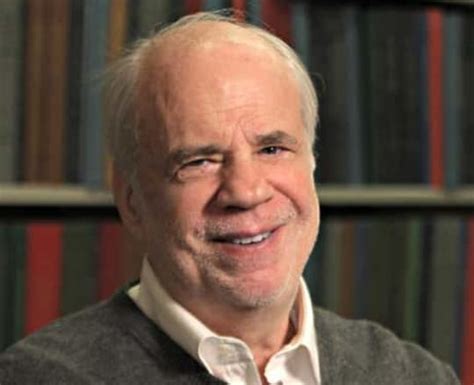
Saul Aaron Kripke

Bay Shore, New York, United States
Archival Overview
Towering American philosopher and logician widely regarded as one of the most influential thinkers of the 20th century, who created Kripke semantics for modal logic as a teenager and revolutionized metaphysics and the philosophy of language with Naming and Necessity (1972).
Biographical Record
Saul Aaron Kripke was born on Long Island, the son of a rabbi, and grew up in Omaha, Nebraska. A child prodigy who taught himself ancient Hebrew and calculus, he published a groundbreaking mathematical completeness theorem for modal logic in the Journal of Symbolic Logic at age eighteen while still a freshman at Harvard University. His possible-worlds semantics—now known as Kripke semantics—revolutionized formal logic, computer science, and linguistics.
In January 1970, Kripke delivered three unscripted lectures at Princeton University that were published as Naming and Necessity (1972), recognized as one of the supreme philosophical masterworks of the 20th century. Demolishing the Frege-Russell descriptivist theory of names, he introduced the concept of "rigid designators" and proved that necessary truths can be discovered a posteriori (such as "water is H2O"). He also presented an influential interpretation of Ludwig Wittgenstein in Wittgenstein on Rules and Private Language (1982) and received the Schock Prize in 2001.
Key Life Milestones
Publication of Naming and Necessity
Published his revolutionary treatise establishing rigid designation and rehabilitating metaphysics in analytic philosophy.
Conferral of the Rolf Schock Prize
Awarded the Rolf Schock Prize in Logic and Philosophy by the Royal Swedish Academy of Sciences in Stockholm.
Memorial Guestbook & Tributes
0 messages recordedLeave a Respectful Tribute
Final Resting Place
Perpetual MemorialHawthorne, New York, United States