 Spain
•
8 views
Spain
•
8 views
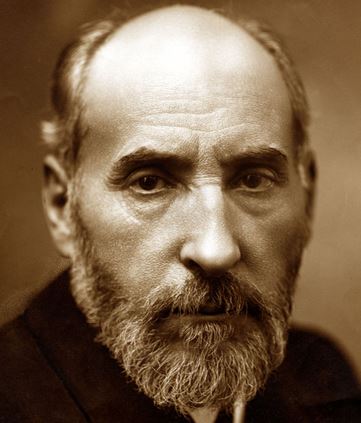
Santiago Ramón y Cajal

Petilla de Aragón (Navarre), Spain
Archival Overview
Spanish histologist and Nobel laureate who established the Neuron Doctrine—proving that the nervous system is composed of discrete individual nerve cells (neurons) communicating across synapses.
Biographical Record
Santiago Ramón y Cajal (1852–1934) revolutionized neuroscience through painstaking histological investigations. Refining Camillo Golgi's silver-nitrate staining technique, Cajal proved that nervous tissue is not an unbroken reticular syncytium, but is composed of contiguous, individual microscopic cells later termed neurons.
Through exquisite hand-drawn illustrations that remain artistic and scientific masterpieces, he mapped the microarchitecture of the brain, spinal cord, retina, and cerebellum, establishing the 'Neuron Doctrine'. He formulated the Law of Dynamic Polarization, explaining the unidirectional flow of nerve impulses. In 1906, Cajal and Golgi shared the Nobel Prize in Physiology or Medicine.
Key Life Milestones
Establishment of the Neuron Doctrine
Demonstrated that bird cerebellar nerve fibers end freely without continuity, overthrowing reticular network theory.
Nobel Prize in Physiology or Medicine
Awarded the Nobel Prize jointly with Camillo Golgi for their foundational discoveries on the structure of the nervous system.
Memorial Guestbook & Tributes
0 messages recordedLeave a Respectful Tribute
Final Resting Place
Perpetual MemorialMadrid, Spain