 Gupta Empire (India)
•
3 views
Gupta Empire (India)
•
3 views
Samudragupta (Napoleon of India)

Pataliputra (Patna), Gupta Empire (India)
Archival Overview
Greatest conqueror of the Gupta Empire whose undefeated military campaigns and patronage of arts and music ushered in India's Golden Age.
Biographical Record
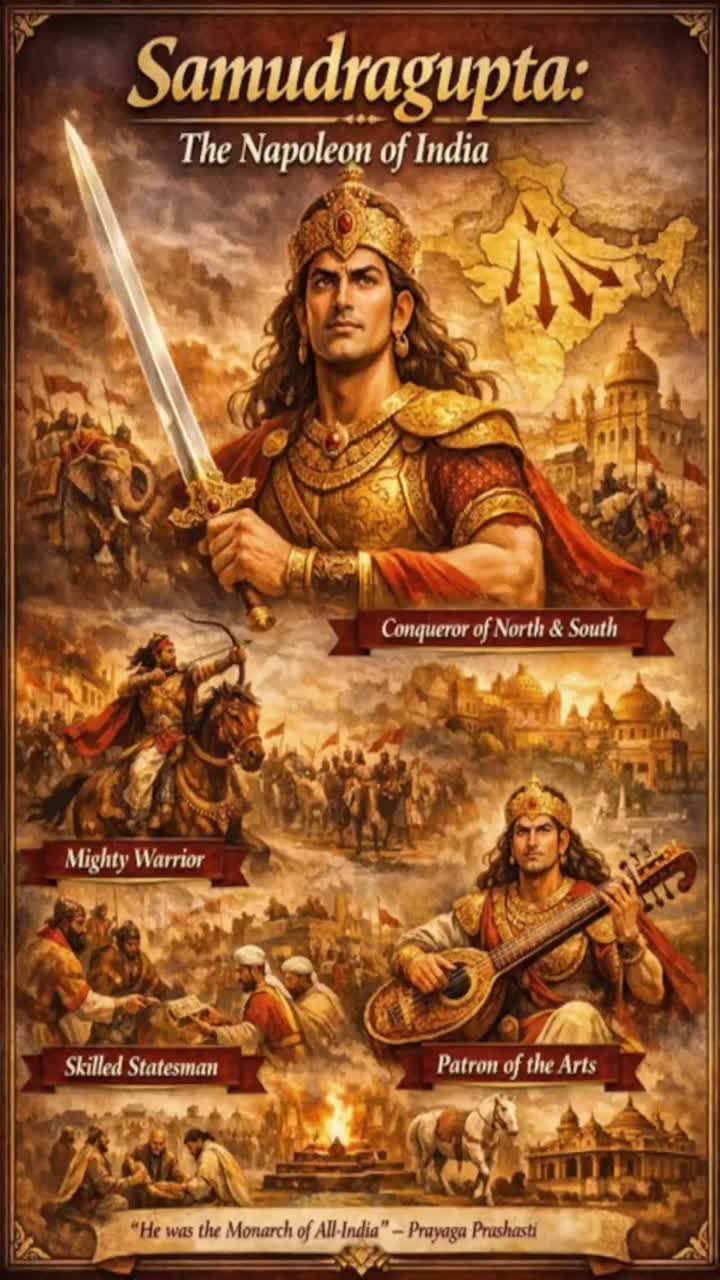
Samudragupta (c. 315–380 AD) was the second emperor of the Gupta dynasty and one of the greatest military strategists in ancient history, often celebrated by modern historians as the 'Napoleon of India'. Succeeding his father Chandragupta I, he launched extensive campaigns that annexed northern Indian rulers and subjugated southern and tribal monarchies into tributary allies.
As commemorated on the famous Allahabad Pillar inscription composed by his court poet Harishena, Samudragupta never suffered a single battlefield defeat. A devout Hindu who performed the sacred Ashvamedha (horse sacrifice) to proclaim his universal sovereignty, he was equally renowned as a talented poet, scholar, and veena player, whose gold coinages set aesthetic standards for centuries.
Key Life Milestones
Harishena's Inscription of Conquests
Engraved the royal prasasti on the Ashoka pillar in Prayag, chronicling the defeat of twelve southern kings and nine northern monarchs.
Chakravartin Sovereign
Revived the ancient Vedic Ashvamedha horse sacrifice, issuing exquisite gold coins to validate his title as lord of all Bharata.
Memorial Guestbook & Tributes
0 messages recordedLeave a Respectful Tribute
Final Resting Place
Perpetual MemorialPrayagraj (Allahabad), India