 Germany
•
12 views
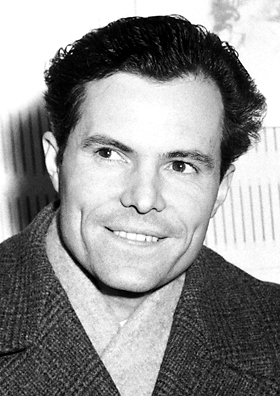
Rudolf Mössbauer

Munich, Germany
Archival Overview
German experimental physicist who discovered recoilless nuclear resonance absorption of gamma rays (the Mössbauer effect), awarded the 1961 Nobel Prize in Physics at age thirty-two.
Biographical Record
Rudolf Ludwig Mössbauer studied physics at the Technical University of Munich. While conducting doctoral research at the Max Planck Institute for Medical Research in Heidelberg, he investigated gamma-ray emission from atomic nuclei locked in crystalline lattices.
In 1957, Mössbauer discovered that at low temperatures, atomic nuclei bound in a crystal lattice can emit and absorb gamma rays without energy loss to recoil. This discovery—Mössbauer spectroscopy—provided an instrument of unprecedented spectroscopic resolution, used in 1959 in the famous Pound-Rebka experiment to confirm Einstein's General Theory of Relativity.
Key Life Milestones
Discovery of the Mössbauer Effect
Discovered recoilless nuclear resonance fluorescence, yielding the highest energy resolution known to physical science.
Nobel Prize in Physics
Awarded the Nobel Prize in Physics at age 32 for his research concerning the resonance absorption of gamma radiation.
Memorial Guestbook & Tributes
0 messages recordedLeave a Respectful Tribute
Final Resting Place
Perpetual MemorialGräfelfing, Germany