 Kingdom of Scotland
•
5 views
Kingdom of Scotland
•
5 views
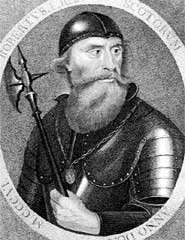
Robert I of Scotland (Robert the Bruce)

Turnberry Castle, Ayrshire, Kingdom of Scotland
Archival Overview
Hero King of Scotland who liberated his nation from English dominion and secured independence at the Battle of Bannockburn in 1314.
Biographical Record
Robert the Bruce was King of Scots from 1306 until his death in 1329, revered as one of Scotland's supreme national heroes. Following the execution of William Wallace and the collapse of Scottish resistance, Bruce stabbed his rival John Comyn before the high altar at Greyfriars Church in Dumfries and had himself crowned King of Scots at Scone.
Initially defeated and hunted as an outlaw through the misty Highlands—where, according to folklore, watching a spider repeatedly attempt to spin its web inspired him never to surrender—Bruce launched a brilliant guerrilla campaign. Methodically recapturing castles across Scotland, he met King Edward II's massive English invasion army at the Battle of Bannockburn on June 23–24, 1314. Utilizing tightly disciplined hedgehog spear formations called schiltrons, Bruce routed the English cavalry. In 1320, Scottish nobles issued the Declaration of Arbroath, proclaiming Scotland's inalienable right to sovereign freedom. In 1328, England formally recognized Scottish independence under the Treaty of Edinburgh-Northampton.
Key Life Milestones
Victory at the Battle of Bannockburn
Treaty of Edinburgh-Northampton
Memorial Guestbook & Tributes
0 messages recordedLeave a Respectful Tribute
Final Resting Place
Perpetual MemorialDunfermline, Fife, United Kingdom