 United States
•
25 views
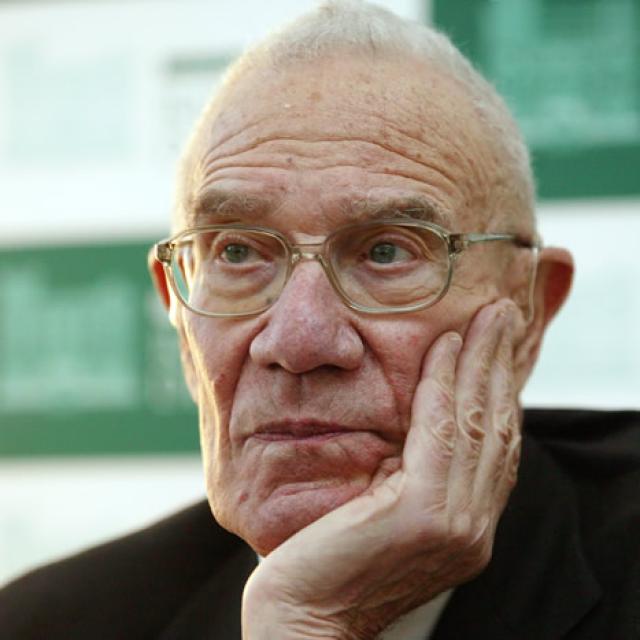
Robert Merton Solow

New York City, United States
Archival Overview
American economist awarded the 1987 Nobel Memorial Prize in Economic Sciences for creating the Solow-Swan neoclassical growth model, which proved that technological progress—rather than capital accumulation—drives long-term economic growth.
Biographical Record
Robert Merton Solow was born in Brooklyn, New York, to Jewish parents. He interrupted his studies at Harvard University to serve in the United States Army in North Africa and Italy during World War II. Returning to Harvard, he earned his PhD under Wassily Leontief, joining the Massachusetts Institute of Technology (MIT) in 1949, where he and Paul Samuelson formed one of the most influential economic duos of the 20th century.
In seminal papers published in 1956 and 1957, Solow constructed the neoclassical growth model (the Solow-Swan model). Using growth accounting to analyze US economic data, Solow proved the startling conclusion that four-fifths of long-term economic growth per worker was attributable not to the accumulation of capital or labor, but to technological progress and innovation—a factor termed the "Solow residual." Solow served on President John F. Kennedy's Council of Economic Advisers, was awarded the Nobel Memorial Prize in Economic Sciences in 1987, and received the Presidential Medal of Freedom in 2014.
Key Life Milestones
Publication of the Solow Growth Model
Published A Contribution to the Theory of Economic Growth in the Quarterly Journal of Economics, establishing modern growth theory.
Nobel Memorial Prize in Economic Sciences
Awarded the Nobel Prize in Economic Sciences for his contributions to the theory of economic growth.
Memorial Guestbook & Tributes
0 messages recordedLeave a Respectful Tribute
Final Resting Place
Perpetual MemorialCambridge, United States