 Kingdom of Hanover (Germany)
•
4,278 views
Kingdom of Hanover (Germany)
•
4,278 views
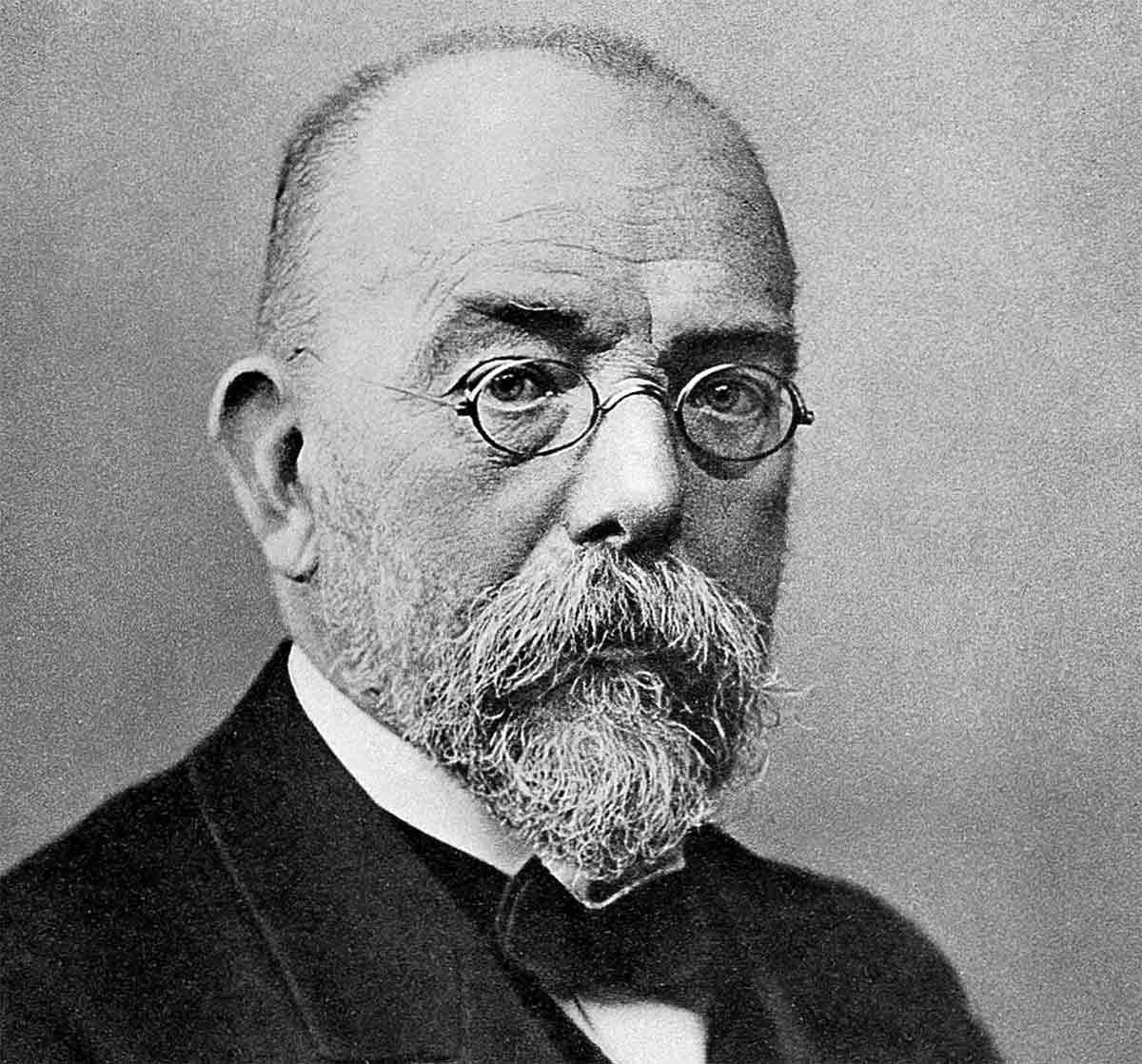
Robert Koch

Clausthal, Kingdom of Hanover, Kingdom of Hanover (Germany)
Archival Overview
Founder of modern bacteriology who identified the causative agents of tuberculosis, cholera, and anthrax, formulating Koch's postulates.
Biographical Record
Heinrich Hermann Robert Koch was a German physician and microbiologist revered alongside Louis Pasteur as a principal founder of modern bacteriology. While serving as a country doctor in Wollstein, Koch used an improvised laboratory in his surgery to unravel the life cycle of Bacillus anthracis, proving that a specific microscopic organism causes anthrax.
Koch transformed bacteriological technique by introducing solid nutrient agar culture media, Petri dishes (devised by his assistant Julius Richard Petri), steam sterilization, and microphotography. On March 24, 1882, in a lecture to the Berlin Physiological Society hailed as one of the greatest moments in medical history, Koch announced his discovery of Mycobacterium tuberculosis, the pathogen responsible for one out of every seven deaths in nineteenth-century Europe. In 1883, he isolated Vibrio cholerae in Egypt and India. He formulated Koch's postulates—the definitive scientific criteria required to establish a causal relationship between a microbe and a disease. For his tuberculosis discoveries, he received the 1905 Nobel Prize in Physiology or Medicine.
Key Life Milestones
Discovery of the Tuberculosis Bacillus
Identified and stained Mycobacterium tuberculosis, proving the bacterial origin of consumption to the Berlin Physiological Society.
Nobel Prize in Physiology or Medicine
Awarded the Nobel Prize in Physiology or Medicine for his investigations and discoveries in relation to tuberculosis.
Memorial Guestbook & Tributes
0 messages recordedLeave a Respectful Tribute
Final Resting Place
Perpetual MemorialBerlin, Germany