 Germany
•
7 views
Germany
•
7 views
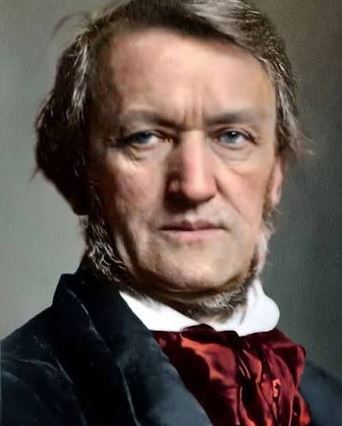
Wilhelm Richard Wagner

Leipzig (Saxony), Germany
Archival Overview
Revolutionary German composer and dramatist who revolutionized Western music with the 'Gesamtkunstwerk' (total work of art), the leitmotif system, chromatic breakdown of tonality in Tristan und Isolde, and the 16-hour Der Ring des Nibelungen.
Biographical Record
Wilhelm Richard Wagner (1813–1883) fundamentally transformed Western opera into the 'Music Drama', authoring both music and poetic librettos himself. In revolutionary essays written during exile in Zürich, Wagner articulated the ideal of the Gesamtkunstwerk ('Total Work of Art')—the seamless synthesis of poetry, visual stagecraft, drama, and symphonic orchestra.
In Tristan und Isolde (1865), his famous opening 'Tristan chord' delayed harmonic resolution for four hours, uncoupling traditional tonality and inaugurating modern 20th-century music. With the backing of King Ludwig II of Bavaria, Wagner built his own festival theatre at Bayreuth with a hidden sunken orchestra pit to stage his monumental four-opera tetralogy Der Ring des Nibelungen (*The Ring of the Nibelung*, 1876) and his final sacred festival drama Parsifal.
Key Life Milestones
Premiere of Tristan und Isolde in Munich
Staged Tristan und Isolde under Hans von Bülow, introducing the Tristan chord and redefining harmonic tonality.
First Complete Ring Cycle at Bayreuth Festspielhaus
Inaugurated the Bayreuth Festival with the premiere of the complete 16-hour Der Ring des Nibelungen tetralogy.
Memorial Guestbook & Tributes
0 messages recordedLeave a Respectful Tribute
Final Resting Place
Perpetual MemorialVenice, Italy