 Switzerland
•
24 views
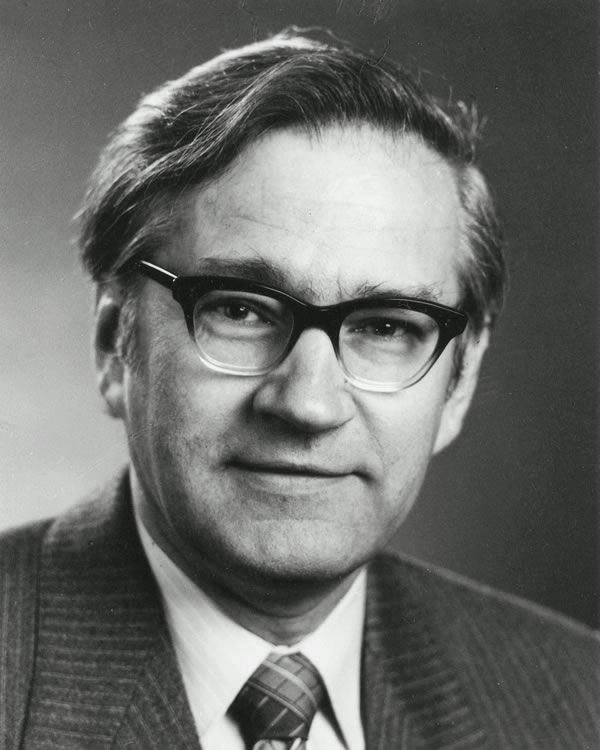
Richard Robert Ernst

Winterthur, Switzerland
Archival Overview
Swiss physical chemist and ETH Zurich professor who won the 1991 Nobel Prize in Chemistry for developing Fourier transform Nuclear Magnetic Resonance (FT-NMR) spectroscopy and multi-dimensional NMR, the foundational technology behind medical MRI.
Biographical Record
Richard Robert Ernst was born in Winterthur, Switzerland, and studied chemistry at ETH Zurich, completing his doctorate in 1962. Moving to Palo Alto, California, to work at Varian Associates, he collaborated with Weston Anderson in 1966 to replace slow continuous-wave radiofrequency sweeps with short, intense radiofrequency pulses followed by mathematical Fourier transformation, increasing the sensitivity of NMR spectroscopy by up to a hundredfold.
Returning to ETH Zurich in 1968, Ernst invented two-dimensional and multi-dimensional NMR spectroscopy in the 1970s, enabling chemists and structural biologists to determine the complete three-dimensional structures of complex proteins, nucleic acids, and macromolecules in solution. His discoveries also laid the theoretical foundation for magnetic resonance imaging (MRI) in clinical medicine. Solely awarded the 1991 Nobel Prize in Chemistry, he was also a passionate collector and scholar of Tibetan thangka paintings.
Key Life Milestones
Invention of Fourier Transform NMR
Published the revolutionary Fourier transform pulse technique, multiplying NMR sensitivity by factors of ten to a hundred.
Nobel Prize in Chemistry
Sole recipient of the Nobel Prize in Chemistry in Stockholm for developing high-resolution NMR methodology.
Memorial Guestbook & Tributes
0 messages recordedLeave a Respectful Tribute
Final Resting Place
Perpetual MemorialWinterthur, Zurich, Switzerland