 France
•
9 views
France
•
9 views
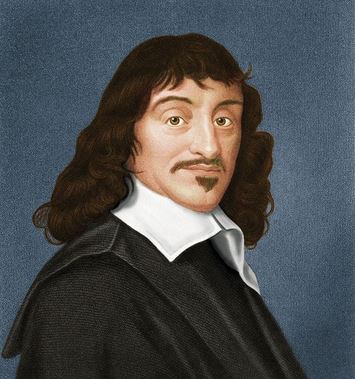
René Descartes

La Haye en Touraine (Descartes), France
Archival Overview
'Father of Modern Philosophy' and inventor of Cartesian coordinates, who demolished skepticism through radical doubt to discover the bedrock principle: Cogito, ergo sum.
Biographical Record
René Descartes (1596–1650) laid the foundation of modern Western rationalism and modern mathematics. In a famous heated stove-room in Germany during the Thirty Years' War, he conceived the unified vision of all sciences connected through mathematical principles, later creating analytical geometry (uniting algebra and geometry).
In his Discourse on the Method (1637) and Meditations on First Philosophy (1641), Descartes deployed systematic methodological doubt, stripping away all sensory beliefs until arriving at an indubitable truth: the very act of doubting proves his existence as a thinking entity (*Cogito, ergo sum*). His mind-body dualism defined modern philosophy.
Key Life Milestones
Publication of 'Discourse on the Method'
Introduced the four rules of scientific reasoning and analytical geometry, publishing 'Cogito, ergo sum'.
Publication of 'Meditations on First Philosophy'
Articulated the ontological proofs of God, Cartesian dualism, and the foundational nature of pure intellect.
Memorial Guestbook & Tributes
0 messages recordedLeave a Respectful Tribute
Final Resting Place
Perpetual MemorialStockholm, Sweden