 Czech Republic
•
8 views
Czech Republic
•
8 views
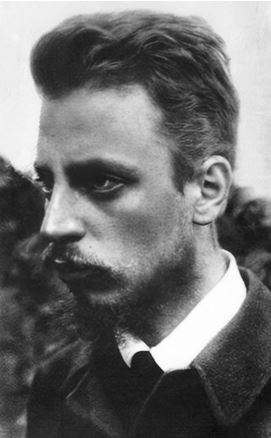
René Karl Wilhelm Johann Maria Rilke (Rainer Maria Rilke)

Prague (Bohemia), Czech Republic
Archival Overview
One of the supreme lyric poets in world literature whose mystical communion with physical objects in New Poems, Letters to a Young Poet, and the transcendent Duino Elegies ('Every angel is terrifying') explored the sacred beauty of being.
Biographical Record
Rainer Maria Rilke (1875–1926) was born in Prague. Travelling to Russia with his lover Lou Andreas-Salomé in 1899, he experienced an epiphany meeting Leo Tolstoy and absorbing Russian peasant spirituality. In Paris, working as personal secretary to sculptor Auguste Rodin, Rilke learned to 'see' physical objects with sculptural precision, creating his revolutionary 'thing-poems' (*Dinggedichte*) in New Poems (1907), such as The Panther and Archaic Torso of Apollo ('You must change your life').
His epistolary classic Letters to a Young Poet (1929) became humanity's most cherished handbook on solitary creative courage. In winter 1912, walking along the storm-battered sea cliffs of Duino Castle near Trieste, Rilke heard an angelic voice calling out in the wind: 'Who, if I cried out, would hear me among the angelic orders?' After a ten-year struggle interrupted by WWI, at the isolated Swiss stone tower of Château de Muzot in February 1922, Rilke completed the ten Duino Elegies and the fifty-five Sonnets to Orpheus in a single miraculous hurricane of inspiration.
Key Life Milestones
Publication of Archaic Torso of Apollo and New Poems
Published his supreme 'thing-poem' ending with the immortal injunction: 'Du mußt dein Leben ändern' (You must change your life).
The Miracle at Muzot: Duino Elegies and Sonnets to Orpheus
Completed his ten Duino Elegies and all 55 Sonnets to Orpheus in a twenty-day hurricane of creative inspiration.
Memorial Guestbook & Tributes
0 messages recordedLeave a Respectful Tribute
Final Resting Place
Perpetual MemorialVal-Mont Sanatorium (Glion sur Montreux), Switzerland