 Kingdom of Spain
•
2 views
Kingdom of Spain
•
2 views
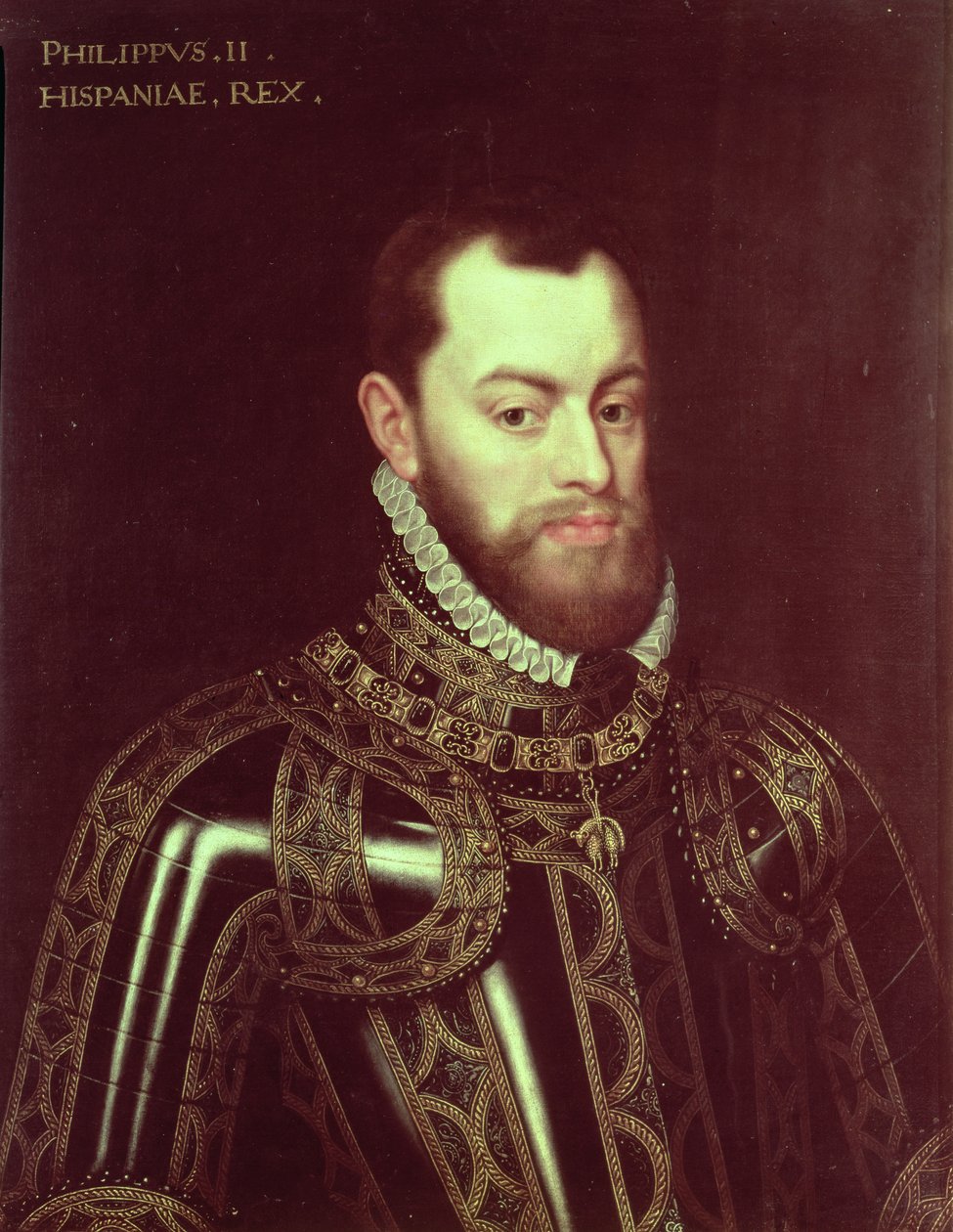
Philip II of Spain

Valladolid, Kingdom of Spain
Archival Overview
King of Spain during its Golden Age, champion of the Counter-Reformation, builder of El Escorial, and ruler of the Iberian Union.
Biographical Record
Philip II of Spain, called 'the Prudent' (El Prudente), was the administrative master of the first global empire in human history. Inheriting Spain, the Netherlands, southern Italy, and the vast American viceroyalties from his father Charles V, Philip governed as an obsessive, ascetic bureaucrat-king who worked sixteen hours a day annotating dispatches from his monastic cell in the colossal palace-monastery of San Lorenzo de El Escorial, which he constructed north of Madrid.
In 1571, Philip organized the Holy League whose multinational Christian fleet crushed the Ottoman navy at the monumental Battle of Lepanto. In 1580, Philip claimed the vacant Portuguese throne, uniting the entire Iberian Peninsula and its vast overseas trading empires in Africa, Brazil, India, and East Asia for sixty years (the Iberian Union). Championing the Catholic Counter-Reformation, Philip dispatched the ill-fated Spanish Armada against Elizabeth I's England in 1588. Under his patronage, Spanish literature and art flourished in the Golden Age (Siglo de Oro) with Cervantes, Lope de Vega, and El Greco. The Philippine archipelago in Asia was named in his enduring honor.
Key Life Milestones
Victory at the Battle of Lepanto
Creation of the Iberian Union
Memorial Guestbook & Tributes
0 messages recordedLeave a Respectful Tribute
Final Resting Place
Perpetual MemorialSan Lorenzo de El Escorial, Madrid, Spain