 Great Britain
•
29 views
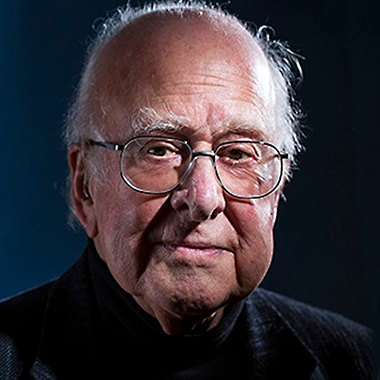
Peter Ware Higgs

Newcastle upon Tyne, Great Britain
Archival Overview
British theoretical physicist who predicted the existence of the Higgs boson, explaining how subatomic particles acquire mass. Awarded the 2013 Nobel Prize in Physics following its discovery at CERN.
Biographical Record
Peter Higgs (1929–2024) was one of the most transformative theoretical physicists of the modern era. While serving on the faculty at the University of Edinburgh in 1964, he authored the seminal papers postulating what became known as the Higgs field—an invisible energy field permeating the universe through which elementary particles obtain their mass via the Higgs mechanism.
His theoretical prediction stood unconfirmed for nearly five decades until July 2012, when physicists operating the Large Hadron Collider at CERN in Geneva officially announced the discovery of a particle consistent with the Higgs boson. In 2013, Higgs shared the Nobel Prize in Physics with François Englert.
Characterized by profound modesty and dedication to academic teaching, Higgs consistently deflected personal praise toward his experimental colleagues, leaving a monumental legacy that completed the Standard Model of particle physics.
Key Life Milestones
Prediction of the Higgs Mechanism
Published groundbreaking physical papers proposing the symmetry-breaking mechanism and scalar boson that impart mass to matter.
Nobel Prize in Physics
Awarded the Nobel Prize in Physics alongside François Englert following experimental confirmation of the Higgs boson at CERN.
Memorial Guestbook & Tributes
0 messages recordedLeave a Respectful Tribute
Final Resting Place
Perpetual MemorialEdinburgh, United Kingdom