 French Empire (now Germany)
•
1 views
French Empire (now Germany)
•
1 views
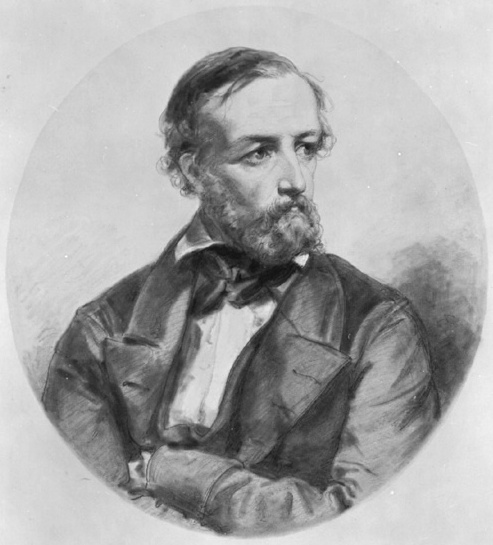
Peter Gustav Lejeune Dirichlet

Duren, French Empire (now Germany)
Archival Overview
German mathematician who founded analytic number theory, formulated Dirichlet's theorem on arithmetic progressions, and introduced the modern formal definition of a mathematical function.
Biographical Record
Peter Gustav Lejeune Dirichlet (1805–1859) studied in Paris under Fourier and Laplace before succeeding Carl Friedrich Gauss at Gottingen. In 1837, by applying complex analysis and L-series to number theory, he proved that any arithmetic progression with co-prime first term and difference contains infinitely many prime numbers.
Dirichlet established the modern concept of a function as a rule assigning to each input exactly one output, regardless of algebraic formula. His rigorous convergence conditions for Fourier series established the foundations of real analysis.
Key Life Milestones
Theorem on Arithmetic Progressions
Proved the existence of infinitely many primes in arithmetic progressions, founding analytic number theory.
Successor to Gauss at Gottingen
Appointed to the prestigious chair of mathematics at Gottingen upon the death of Carl Friedrich Gauss.
Memorial Guestbook & Tributes
0 messages recordedLeave a Respectful Tribute
Final Resting Place
Perpetual MemorialGottingen, Germany