 France
•
3,642 views
France
•
3,642 views
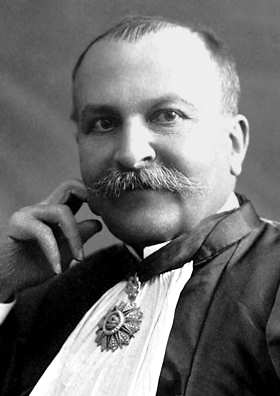
Paul Sabatier

Carcassonne, Aude, France
Archival Overview
French chemist who discovered catalytic hydrogenation of organic compounds with finely divided nickel, winning the 1912 Nobel Prize.
Biographical Record
Paul Sabatier was a French chemist whose foundational work in heterogeneous catalysis transformed both organic chemistry laboratories and massive global industries. After completing his doctoral thesis under Marcelin Berthelot at the Collège de France, Sabatier joined the faculty of the University of Toulouse, where he remained for the rest of his life, turning down prestigious offers from Paris to foster science in the French provinces.
In 1897, working with Jean-Baptiste Senderens, Sabatier discovered that passing unsaturated organic vapors mixed with hydrogen over finely dispersed nickel powder catalyzed rapid hydrogenation, converting carbon-carbon double and triple bonds into single bonds without high temperatures. This Sabatier process made possible the industrial hydrogenation of liquid vegetable oils into solid fats (margarine) and modern petroleum refining. Furthermore, he discovered the Sabatier reaction—reacting carbon dioxide and hydrogen at elevated temperatures with nickel to produce methane and water, a reaction used today aboard the International Space Station to recycle astronaut oxygen. In 1912, Sabatier received the Nobel Prize in Chemistry.
Key Life Milestones
Discovery of Catalytic Hydrogenation
Discovered that finely divided nickel catalyzes the hydrogenation of unsaturated hydrocarbons, revolutionizing organic chemistry.
Nobel Prize in Chemistry
Awarded the Nobel Prize in Chemistry for his method of hydrogenating organic compounds in the presence of finely disintegrated metals.
Memorial Guestbook & Tributes
0 messages recordedLeave a Respectful Tribute
Final Resting Place
Perpetual MemorialToulouse, Haute-Garonne, France