 France
•
7 views
France
•
7 views
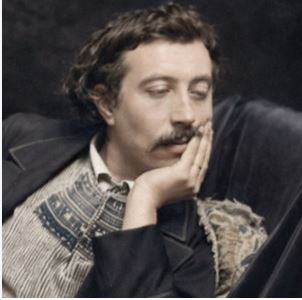
Eugène Henri Paul Gauguin

Paris, France
Archival Overview
French Post-Impressionist painter who abandoned bourgeois civilization to pioneer Synthetism and Symbolism, using flat blocks of pure non-naturalistic color and mythic Tahitian imagery in Where Do We Come From? What Are We? Where Are We Going?
Biographical Record
Paul Gauguin (1848–1903) began his adult life as a prosperous Paris stockbroker before abandoning family and career to dedicate himself totally to art. Working in Brittany at Pont-Aven with Émile Bernard, Gauguin developed Synthetism, using pure, flat planes of arbitrary color bounded by dark outlines (*cloisonnism*), as seen in Vision After the Sermon (1888).
Yearning to escape modern industrial civilization for an unspoiled earthly Eden, Gauguin sailed to French Polynesia. In Tahiti and the Marquesas Islands, he produced a sensual, mythic body of work exploring ancestral spirituality and tropical light, crowned by his monumental 1897 philosophical testament: Where Do We Come From? What Are We? Where Are We Going? His radical liberation of color from natural representation directly inspired the Fauves and Picasso.
Key Life Milestones
Painting of Vision After the Sermon (Jacob Wrestling the Angel)
Completed the manifesto of Synthetism in Brittany with its revolutionary flat field of vermilion red.
Where Do We Come From? What Are We? Where Are We Going?
Painted his monumental philosophical masterpiece in Tahiti before an attempted suicide, summing up human destiny.
Memorial Guestbook & Tributes
0 messages recordedLeave a Respectful Tribute
Final Resting Place
Perpetual MemorialAtuona (Hiva Oa, Marquesas Islands), France