 German Empire
•
3 views
German Empire
•
3 views
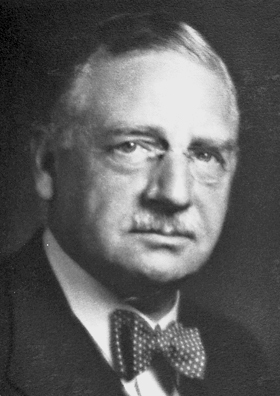
Otto Loewi

Frankfurt am Main, German Empire
Archival Overview
German-American pharmacologist who was awarded the 1936 Nobel Prize in Medicine for proving that nerve impulses are transmitted chemically across synapses, famously conceiving his Nobel-winning frog heart experiment in an Easter dream.
Biographical Record
Otto Loewi (1873–1961) studied medicine in Strasbourg and Munich, serving as professor of pharmacology at the University of Graz. On Easter Sunday night in 1921, Loewi awoke from a dream with the design of a definitive experiment, scribbling it on paper before falling asleep; finding the note illegible the next morning, he awoke again the following night at 3:00 AM, went directly to his lab, and executed it.
Loewi dissected two beating frog hearts: stimulating the vagus nerve of the first heart to slow its beat, he transferred its perfusion fluid to the second heart; the second heart immediately slowed as well, proving that the vagus nerve released a chemical substance (Vagusstoff, later identified as acetylcholine). In 1938, arrested by the Gestapo in Austria, he surrendered his Nobel prize money to purchase an exit visa.
Key Life Milestones
The Famous Vagusstoff Experiment
Proved chemical synaptic transmission using isolated dual frog hearts, ending the nerve conduction controversy.
Awarded the Nobel Prize in Medicine
Honored alongside Sir Henry Dale for discoveries relating to chemical transmission of nerve impulses.
Memorial Guestbook & Tributes
0 messages recordedLeave a Respectful Tribute
Final Resting Place
Perpetual MemorialWoods Hole (Massachusetts), United States