 German Empire (Germany)
•
1,773 views
German Empire (Germany)
•
1,773 views
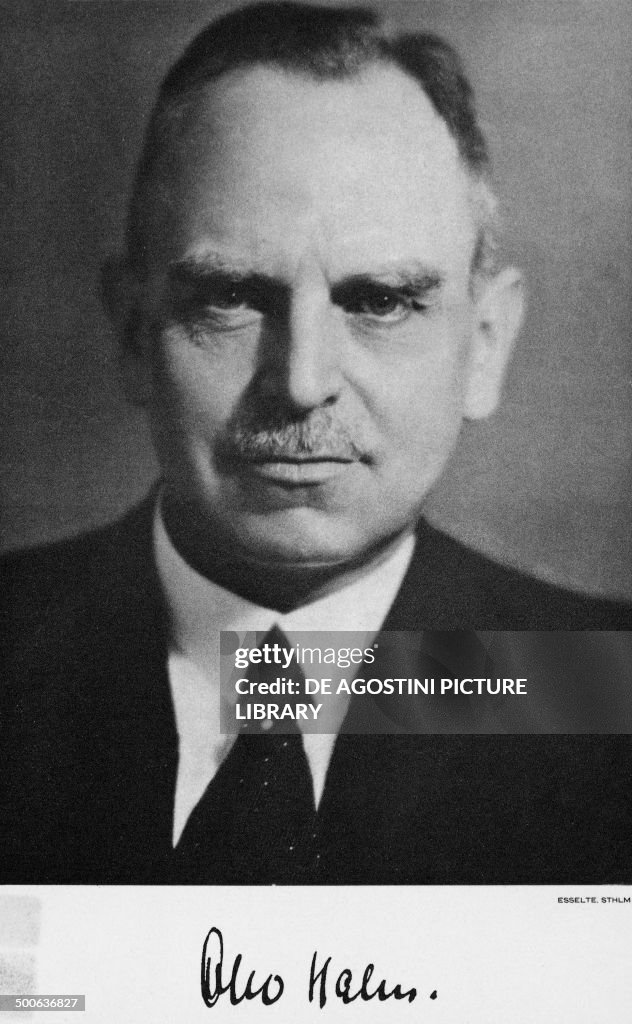
Otto Hahn

Frankfurt am Main, German Empire (Germany)
Archival Overview
German chemist regarded as the 'father of nuclear chemistry' who discovered nuclear fission with Fritz Strassmann in 1938.
Biographical Record
Otto Hahn was a German chemist and radiochemist whose discovery of nuclear fission split the atomic nucleus and unlocked the terrifying power of nuclear energy. A student of William Ramsay in London and Ernest Rutherford in Montreal, Hahn formed a legendary thirty-year collaboration with Austrian physicist Lise Meitner at the Kaiser Wilhelm Institute for Chemistry in Berlin.
In December 1938, months after Meitner was forced to flee Nazi persecution to Sweden, Hahn and Fritz Strassmann bombarded uranium with thermal neutrons. In an astonishing analytical result, Hahn discovered that the uranium nucleus had not merely captured a neutron, but had burst apart into lighter elements, specifically barium. Communicating the result to Meitner, she and Otto Frisch provided the theoretical physical explanation, coining the term nuclear fission. Hahn was awarded the 1944 Nobel Prize in Chemistry. Devastated by the atomic bombings of Hiroshima and Nagasaki, Hahn became an ardent campaigner against nuclear weapons and was the founding president of the Max Planck Society.
Key Life Milestones
Discovery of Nuclear Fission
Identified barium as a byproduct of uranium neutron bombardment, discovering the fission of heavy atomic nuclei.
Nobel Prize in Chemistry
Awarded the Nobel Prize in Chemistry for his discovery of the fission of heavy nuclei.
Memorial Guestbook & Tributes
0 messages recordedLeave a Respectful Tribute
Final Resting Place
Perpetual MemorialGöttingen, Lower Saxony, Germany